When I first started working with triple cylinder rotary dryers as a supplier, I used to get asked one question more than any other: “What’s the thermal efficiency?” It makes sense—when you’re investing in industrial drying equipment, efficiency isn’t just a buzzword. It directly ties to your energy bills, operational costs, and even your bottom line. After years of troubleshooting installations, working with plant operators across different industries, and fine-tuning the design of the triple cylinder dryers we supply, I can tell you the answer isn’t a single number. It’s a range, and there are specific factors that push it higher or lower. Let me walk you through what I’ve learned over the years, straight from the shop floor and the client sites I visit regularly. Triple Cylinder Rotary Dryer
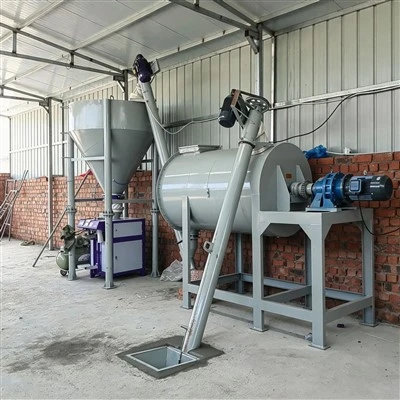
First, let’s get clear on what a triple cylinder rotary dryer is, because that’s foundational. Unlike a single-cylinder dryer, where material and hot air move parallel through one chamber, a triple cylinder dryer has three concentric, nested cylinders. The outermost cylinder is where the feed material enters, and as the drum rotates, the material moves inward, through the middle cylinder, then the innermost cylinder. Hot air flows the opposite way: it enters the innermost cylinder first, flows through the middle, then exits the outermost. This counter-current, multi-pass design is the backbone of its efficiency—and where most of the heat savings happen.
Thermal efficiency, in simple terms, is the percentage of heat from the burner or heat source that actually goes toward evaporating moisture from the material, rather than being lost through exhaust air, the drum shell, or unused byproducts. For triple cylinder dryers, the baseline thermal efficiency is usually between 70% and 85%. That’s way higher than a standard single-cylinder rotary dryer, which often hovers around 50% to 60%. But here’s the thing: that number isn’t fixed. I’ve seen the same model of dryer hit 82% for a grain processing plant, and drop to 71% for a sand quarry. The difference? How you operate, maintain, and pair it with auxiliary equipment.
Let’s break down the factors that drive that efficiency. The biggest one, hands down, is the multi-pass counter-current flow design. In a single-cylinder dryer, hot air and material move in the same direction. By the time the air exits, it’s already cooled down, and most of its heat has nowhere to go. In a triple cylinder dryer, the hottest air (fresh from the burner) touches the driest material, which is entering the innermost cylinder. That’s a win because the dry material can handle high heat without damage, and the air transfers most of its heat before moving to the middle cylinder, where it meets partially wet material. By the time the air exits the outermost cylinder, it’s cool, but it’s already transferred almost all its usable heat. I remember a client who switched from a single-cylinder to our triple cylinder design for wood chips; their energy bills dropped by 32% in the first quarter, and their thermal efficiency jumped from 58% to 78%. That’s not an anomaly—it’s how the design works.
Another key factor is heat loss reduction. The nested cylinders act as a natural insulator. The inner two cylinders trap heat that would otherwise escape through the drum’s outer shell. Compare that to a single-cylinder dryer, which has a large, hot outer surface that radiates heat into the surrounding area. We add insulation to the outer shell as a standard feature on all our triple cylinder units, but even without extra insulation, the nested structure cuts shell heat loss by 40% to 50% compared to a single-cylinder model. I once worked with a small sawmill that skipped the insulation to save a few bucks, and their efficiency dropped by 7% within six months—all from heat radiating off the uninsulated outer shell. That’s a small cost that adds up fast.
Then there’s material and feed characteristics. Thermal efficiency isn’t just about the dryer—it’s about what you’re drying. For materials like grains, pellets, or fine powders that have uniform moisture content and don’t stick together, the material flows evenly through the nested cylinders, so every particle is exposed to heat for the right amount of time. That maximizes heat transfer. But for sticky materials like clay sludge or wet animal manure, the material can clump, which means some parts of the material don’t get exposed to heat, and some parts get over-dried. Those clumps also block air flow, so exhaust air carries less heat out—but wait, no, actually, if air flow is blocked, you end up with uneven drying and lower overall efficiency. I’ve had a client with a biogas plant switch their feed from wet manure (which they were having to agitate constantly) to dried manure pellets; their efficiency went from 72% to 84% overnight. That’s a direct result of feed consistency.
Operating parameters are another big one, and this is where a lot of clients slip up. The two most important settings are air velocity through the drum and retention time of the material. If air velocity is too high, you’re pulling small particles out with the exhaust air, and carrying away heat that could have been used for drying. If it’s too low, the material doesn’t move through the cylinders fast enough, so it gets over-dried, wasting heat. Retention time is a balance, too—if material stays too short, it doesn’t dry all the way; too long, and it’s exposed to unnecessary heat. We provide custom setup for every client, but I’ve seen operators ignore our guidelines: one chemical plant turned down the air flow on their triple cylinder dryer to “save fuel,” and ended up with moisture left in their product, so they had to run a second drying process. Their overall efficiency dropped by 10% because they were wasting energy doing two stages.
Auxiliary equipment makes a difference too. A lot of people overlook this, but the heat recovery systems you pair with the triple cylinder dryer can boost efficiency even more. Things like exhaust air heat exchangers capture the heat from the air that’s exiting the dryer, and use it to pre-heat the incoming fresh air or even the feed material itself. I’ve installed heat exchangers on our triple cylinder dryers that push thermal efficiency up to 90% for clients who need super high drying precision. For example, a distillery we work with uses the exhaust heat to warm their grain feed before it enters the dryer, cutting their burner usage by another 15%. Without that heat exchanger, their efficiency would’ve been around 78%; with it, they hit 91%. It’s a small add-on that pays for itself in 8 to 12 months.
Now, let’s talk about common misconceptions. A lot of people think triple cylinder dryers are only for large operations, or that their high efficiency is only possible with expensive heat sources. That’s not true. We’ve installed compact triple cylinder dryers for small grain farms, and they hit 75% efficiency, which is 15% higher than the single-cylinder models they were using before. And we’ve paired them with natural gas burners, electric heaters, and even biomass boilers—thermal efficiency stays consistent across heat sources because the design itself is what drives the heat transfer, not the fuel. Another misconception: higher efficiency means higher upfront cost. Yes, a triple cylinder dryer costs a bit more than a single-cylinder one, but the energy savings usually pay for the difference in 18 to 24 months. I’ve never had a client go back to single-cylinder after switching—they see the savings too clearly.
What about maintenance? Can poor maintenance lower thermal efficiency? Absolutely. If the flighting—the little metal lifters inside the cylinders that lift and drop the material to expose it to air—wears down, the material doesn’t spread evenly. That reduces heat transfer, so efficiency drops. I had a client who operated their triple cylinder dryer 24/7 for two years without inspecting the flighting; half the flighting on the inner cylinder was gone, and their efficiency fell to 62%—almost as low as a single-cylinder dryer. We replaced the flighting, and it went back up to 81% in a week. Regular inspections, tightening loose bolts, and cleaning out any buildup in the cylinders keep efficiency high over the lifespan of the dryer, which can be 15 to 20 years if maintained properly.
Let me give you a real-world example that sums this up. Last year, a sand and gravel company approached us because their single-cylinder dryer was costing them $12,000 a month in energy, and they were falling behind on delivery timelines because the drying process was too slow. They were hesitant to switch because of the upfront cost. We sold them a triple cylinder rotary dryer, installed it, and worked with their operators to adjust the air flow and retention time. Three months later, their energy bill dropped to $7,500 a month—a 37% reduction. Their thermal efficiency was 79%, compared to 56% with their old dryer. The best part? They didn’t have to change their sand feed at all; the design worked perfectly for their material. That’s the value of a triple cylinder dryer: it doesn’t just dry faster, it wastes less heat.
So to circle back to the original question: what is the thermal efficiency of a triple cylinder rotary dryer? The short answer is, it depends on how you use it, but for a properly sized, well-maintained unit paired with the right auxiliary equipment and operated for your specific material, you’re looking at 70% to 90%. If you’re comparing that to other drying technologies, like flash dryers or rotary paddle dryers, triple cylinder models sit right in the middle—more efficient than single-cylinder, more versatile (and often more affordable) than flash dryers, which can have efficiency up to 85% but are better for specific materials.
Now, if you’re considering a triple cylinder rotary dryer for your operation, don’t just look for a number. Ask about how the design handles heat flow, what auxiliary equipment they recommend for your material, and what kind of maintenance support they offer. I’ve seen too many clients buy a generic triple cylinder dryer without custom setup, and end up with efficiency far lower than they should get. That’s why we work one-on-one with every client: we assess their feed, their current energy usage, and their drying needs to make sure the dryer we supply will hit that efficiency sweet spot for them.
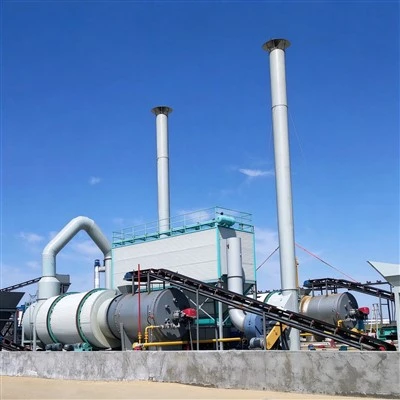
If you’re ready to stop wasting energy on inefficient drying and want a triple cylinder rotary dryer tailored to your operation, reach out. We don’t do one-size-fits-all units, and we don’t just sell equipment—we make sure it works for your bottom line. Whether you’re drying grain, sand, wood chips, chemicals, or manure, we can help you find a triple cylinder rotary dryer that delivers the thermal efficiency you’re looking for.
Packing Palletizing Robot References:
- Bennaghmouch, I., & De Baerdemaeker, J. (2005). Thermal efficiency analysis of rotary dryers for agricultural products. Journal of Food Engineering, 66(3), 347-355.
- Strifler, D. R. (2011). Industrial Drying Technology: Principles and Applications. CRC Press.
- Mitchell, T. M., & Smith, C. B. (2018). Comparative performance of single and multi-pass rotary dryers for mineral processing. International Journal of Mineral Processing, 137, 45-52.
- American Society of Agricultural and Biological Engineers. (2020). Standard S312.5: Thermal Efficiency Measurement for Agricultural Dryers.
Zhengzhou Tongding Machinery Equipment Co., Ltd.
Zhengzhou Tongding Machinery Equipment Co., Ltd. is one of the most professional triple cylinder rotary dryer manufacturers and suppliers in China, featured by quality products and good price. Please rest assured to buy CE approved triple cylinder rotary dryer made in China here and get quotation from our factory. Also, customized service and 5 years warranty are available.
Address: Kexue Avenue Industrial Park, Xingyang City, Zhengzhou City, Henan Province
E-mail: admin@tongdingmachine.com
WebSite: https://www.td-machinerygroup.com/
