If you’ve spent any time in the manufacturing or industrial supply space, you’ve probably heard the question I get at least once a week from oil and gas operators, maintenance supervisors, and engineering leads: “Is Monel used in oil and gas?” As a Monel Alloy supplier with over a decade of working directly with facilities across North America and parts of the Middle East, this question isn’t just a passing curiosity—it’s the foundation of why Monel remains one of the most in-demand alloys for high-stakes upstream, midstream, and downstream operations. Monel Alloy
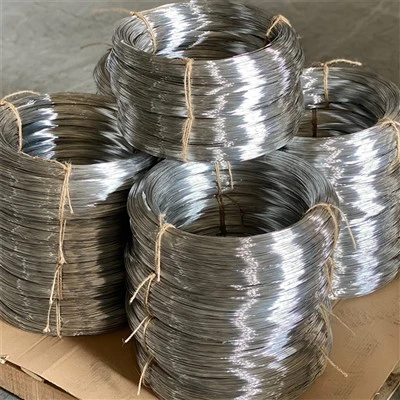
Let’s cut through the generic alloy marketing you’ll find online. Monel isn’t a one-size-fits-all metal, and that’s exactly why it finds its way into critical components of oil and gas infrastructure that other alloys can’t hold up to. First, a quick refresher for anyone new to the space: Monel is a family of nickel-copper alloys, most commonly Monel 400 and Monel K-500, with a roughly 67% nickel and 30% copper balance, plus small traces of iron, manganese, carbon, and silicon. Unlike carbon steel, which rusts out quickly in harsh environments, or even stainless steel, which can crack under extreme heat or corrosive chemical exposure, Monel’s unique composition is tailor-made for the exact pressures oil and gas operations face every day.
Now, let’s get to the real-world use cases, because that’s what actually matters when you’re spec’ing materials for a new pipeline or retrofitting an aging refinery. The upstream segment—think drilling, wellheads, and subsea infrastructure—relies heavily on Monel components. Subsea oil and gas operations, in particular, put materials through a brutal test: constant exposure to saltwater (seawater corrosion is a huge pain point here), high hydrostatic pressure at depths of 1,000+ meters, and fluctuating temperatures that swing from near-freezing on the seabed to thousands of degrees at the drill bit. I’ve supplied Monel K-500 fasteners and valve stems to a Gulf of Mexico drilling operator for their subsea Christmas trees, and they told me after three years of service, those parts had zero sign of pitting or corrosion—something even 316L stainless steel, which is often cited as a corrosion-resistant option, can’t match. 316L will start to corrode in seawater with high levels of sulfide, a common byproduct of deep-sea oil deposits, but Monel’s resistance to sulfide stress cracking (SSC) and chloride-induced corrosion is a game-changer here.
Moving to midstream: pipelines, compressor stations, and storage terminals. Midstream operations handle raw crude oil, natural gas, and refined products as they move from the wellhead to the refinery, and along the way, they have to deal with acidic compounds like hydrogen sulfide (H₂S) and carbon dioxide (CO₂), as well as abrasion from crude’s sediment and sulfur particles. Monel 400 is a go-to for pump impellers, pipe fittings, and heat exchangers in midstream compressor stations. Last year, I worked with a Texas-based pipeline company that was replacing carbon steel pump impellers every 18 months due to corrosion from H₂S in their crude feed. They switched to Monel 400 impellers, and two years later, they still haven’t had to replace a single unit—saving them roughly $120,000 in downtime and replacement costs. That’s not an anomaly; data from the American Petroleum Institute (API) backs this up, with Monel 400 listed as a qualified material for sour service pipelines (operations with high H₂S content) in API 5L specifications.
Downstream is where Monel really shines for refining operations. Refineries process crude into gasoline, diesel, jet fuel, and other products, and their processing units operate at extreme temperatures and pressures, with exposure to caustic chemicals, organic acids, and sulfur compounds. The crude distillation units (CDUs), catalytic reformers, and alkylation units all have components that need to resist both high-temperature corrosion and mechanical wear. Monel 400 and Monel K-500 are used in valves, gaskets, reactor internals, and even catalyst support grids. For example, in alkylation units, which use hydrofluoric acid (HF) as a catalyst, materials have to withstand extremely corrosive HF environments. Monel’s resistance to HF is unmatched by most other common industrial alloys; carbon steel reacts violently with HF, and even Hastelloy, another high-performance nickel alloy, can degrade in high-concentration HF over time. I’ve supplied Monel 400 heat exchanger tubes to a refinery in the Gulf Coast that processes heavy crude with high HF content, and their maintenance team reported that these tubes have a 15-year service life, compared to 7 years for their previous 304 stainless steel tubes.
Of course, no alloy is perfect, and I always make a point to be transparent with my customers about Monel’s limitations, because misleading clients about what an alloy can (and can’t) do only leads to problems down the line. Monel isn’t ideal for extremely high temperatures over 600°C (1,112°F), at which point it starts to lose some of its strength and can oxidize rapidly. It’s also more expensive than carbon steel or even standard stainless steel, so it’s not the right choice for non-critical components that don’t face harsh corrosion or pressure. I always work with operators to do a material suitability assessment, balancing cost, performance, and service life to make sure they’re not overspending on Monel when a lower-cost alloy will work, or underspending when Monel is the only material that will keep their operations running safely.
Another thing I see a lot of confusion about is the difference between Monel 400 and Monel K-500 in oil and gas applications. Monel 400 is the original, non-magnetic, solid-solution alloy with excellent corrosion resistance, perfect for static components like pipes, tanks, and heat exchangers. Monel K-500 is a precipitation-hardened alloy that has higher tensile strength and hardness, making it ideal for moving, high-stress components like fasteners, valve stems, and pump shafts that are exposed to friction and cyclic loading. I had a customer last year who ordered Monel K-500 bolts for a compressor station’s pump assembly; they had tried using stainless steel bolts before, but the constant vibration and stress from the pump would cause the bolts to fatigue and break every two years. The Monel K-500 bolts have been in place for four years with no issues, saving them from unplanned shutdowns that can cost midstream operators upwards of $100,000 per hour.
Sustainability is another angle that’s become a big priority for oil and gas operators in the last decade, and Monel fits perfectly here. Unlike many industrial alloys, Monel is 100% recyclable, which means operators can salvage components at the end of their service life and send them back to be reprocessed into new Monel parts, reducing waste and lowering their carbon footprint. I’ve had multiple customers tell me that using Monel has helped them meet their sustainability targets because they’re replacing fewer components, reducing material waste, and avoiding the emissions from frequent part replacements and repairs.
Now, let’s address a common question I get: why don’t more operators use Monel? The main barrier is upfront cost. Monel can cost 3–5 times more than carbon steel, which is a big sticker shock for operators used to choosing the lowest initial cost material. But when you factor in service life, downtime costs, and replacement costs, Monel almost always has a lower total cost of ownership (TCO) for critical components. For example, a wellhead valve made of carbon steel might cost $5,000 and last 2 years, totaling $2,500 per year. A similar valve made of Monel 400 might cost $20,000 but last 15 years, totaling $1,333 per year. That’s a 47% lower annual cost, and that’s not even counting the cost of downtime if the carbon steel valve fails.
At the end of the day, Monel is used in oil and gas because it delivers consistent, reliable performance in the environments that matter most. It’s not a fad alloy—it’s a proven solution that has been around for over a century, and its use has only grown as oil and gas operations push into harsher, more challenging environments (deep subsea, sour crude reservoirs, heavy crude refining) where lower-cost alloys can’t keep up.

If you’re an oil and gas operator, engineer, or maintenance manager who’s working on a project and trying to figure out if Monel is the right material for your components, or if you need a reliable supplier for Monel alloys, I’m here to help. I’ve worked with projects of all sizes, from small independent operators to major global energy companies, and I can provide material testing data, compliance with API and other industry standards, and custom solutions tailored to your specific operating conditions. Whether you need Monel 400 pipe, K-500 fasteners, or custom fabricated components, I can help you find the right solution that balances performance, cost, and reliability for your operations.
Titanium Alloy References:
- Nickel Development Institute. (2018). Monel Alloys for Corrosion Resistance in Oil and Gas Applications.
- American Petroleum Institute. (2021). API 5L: Specification for Line Pipe, Monel Alloy Supplement.
- Materials Performance and Evaluation. (2020). Corrosion Behavior of Nickel-Copper Alloys in Sour Oil and Gas Environments.
- NACE International. (2019). Monel Alloys for Chloride Stress Corrosion Cracking Resistance in Subsea Infrastructure.
Jiangsu Xurui Metal Group Co., Ltd.
With abundant experience, we are one of the most professional monel alloy manufacturers and suppliers in China. We are committed to providing high quality metal products for global clients. Please feel free to wholesale bulk high-grade monel alloy in stock here from our factory.
Address: 32-117, South Stainless Steel Market, Xinwu District, Wuxi, Jiangsu, China
E-mail: Mia@xuruimetal.com
WebSite: https://www.xurui-steel.com/
