If you’ve ever stood in a lab, workshop, or pilot plant wondering how to pick the right ducted fume hood for your space, you’re not alone. When I first started working with ducted fume hoods as a supplier a decade ago, I saw way too many organizations either buy too small and deal with constant safety gaps or shell out for a hood that’s way bigger than they need, wasting money on excess energy, space, and maintenance. Today, I’ve worked with hundreds of facilities, from high school chemistry labs to biotech R&D spaces, and the question I get more than any other is: “What size ducted fume hood do I need?” It’s not a one-size-fits-all answer, but breaking down a few key factors will help you get it right the first time. Ducted Fume Hoods
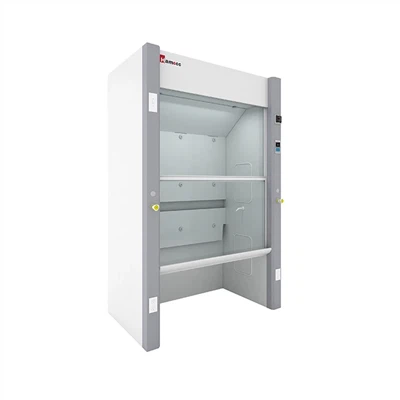
First, let’s start with the basics: ducted fume hoods work by pulling hazardous fumes, vapors, dust, or particulates away from workers and venting them outside the building, so their size directly impacts two critical things: airflow (the amount of air pulled through the hood) and capture velocity (the speed that keeps contaminants from escaping into the lab). The most common mistake I see is people defaulting to hood size based purely on bench space, but that’s only part of the equation. Let’s walk through each step to figure out your ideal size.
First, measure your available workspace, not just the countertop. A lot of operators will look at their lab bench and say, “I need a 6-foot hood because my bench is 6 feet long,” but that’s ignoring the hood’s footprint and the space you need around it for safe operation. Ducted fume hoods come in standard widths: 3 feet, 4 feet, 5 feet, 6 feet, and even custom widths for specialized spaces. But the depth matters too—standard depths are 24 inches (for benchtop use), 30 inches, and 36 inches (for larger equipment like centrifuges or distillation setups). A 24-inch deep hood won’t fit a 30-inch wide distillation apparatus, so measuring the actual equipment you’ll be running inside the hood is non-negotiable. If you plan to use the hood for small experiments (beakers, test tubes, regular lab glassware), a 24-inch depth will work. If you’re dealing with larger equipment, or if you’ll have multiple pieces of equipment running at once, you’ll need that extra depth.
Next, account for space clearance around the hood. OSHA and ANSI (the American National Standards Institute) have specific guidelines for how much space you need on the sides and front of a ducted fume hood to maintain proper airflow. Most importantly, you need at least 30 inches of clear space in front of the hood for workers to access the interior, adjust equipment, and avoid blocking the airflow into the hood’s face. Blocking that front space with cabinets, storage, or other furniture can reduce capture velocity by as much as 50%, turning a properly sized hood into a safety hazard. On the sides, leaving at least 12 inches of space between the hood and adjacent walls or other equipment is recommended to prevent turbulence that can push fumes back into the lab. I once worked with a university that installed a 6-foot hood but left only 6 inches of space between it and a wall; their initial airflow test showed the capture velocity was too low, and they had to reconfigure their lab layout to fix it. That’s a preventable cost, so don’t skip the clearance measurement.
Once you have the physical space figured out, the next factor is your facility’s ventilation requirements and hood performance. The size of the hood directly affects the required airflow rate, measured in cubic feet per minute (CFM). For a standard hood, the rule of thumb is 100 CFM per linear foot of hood width, plus an extra 100 CFM for every 6 inches of depth beyond 24 inches. Wait, let’s make that concrete: a 3-foot wide, 24-inch deep hood would be 300 CFM (3 feet x 100 CFM/ft). A 3-foot wide, 30-inch deep hood would be 400 CFM (300 + 100 extra for depth). A 6-foot wide, 24-inch deep hood would be 600 CFM. That’s a simplified calculation, but it works for most routine lab applications. However, if you’re handling highly hazardous materials—like volatile carcinogens, corrosive gases, or large quantities of toxic fumes—you’ll need a higher capture velocity, which means a larger hood or a higher airflow rate. ANSI Z9.5, the standard for laboratory ventilation, specifies that for most general lab use, a face velocity (the speed of air moving across the hood’s open face) of 80 to 120 feet per minute (fpm) is required. For highly hazardous work, that goes up to 100 to 120 fpm, which might mean sizing up your hood to get enough airflow without straining the ventilation system.
Don’t forget to consider your existing ventilation system. If you’re retrofitting an old lab, you can’t just pick a hood size based on your needs—you have to make sure your existing ductwork, fans, and ventilation capacity can handle the CFM the new hood will require. I had a customer in a small commercial lab who ordered a 6-foot hood without checking their ventilation system; their existing ductwork was only rated for 450 CFM, and the 6-foot hood needed 600 CFM, so they had to replace their entire ventilation system after delivery. That added thousands of dollars to their cost and delayed their project by weeks. If you’re retrofitting, work with your HVAC team to calculate your maximum available CFM before choosing your hood size. If you’re building a new space, you can coordinate with our team to design a ventilation system that matches your hood size, so you don’t have that problem.
Another often-overlooked factor: future use. If you’re a small startup that only runs small experiments now but plans to scale up to larger equipment in two years, it’s smarter to size your hood for that future use instead of buying a smaller one now and having to replace it later. I’ve seen startups buy 3-foot hoods to save money, then within 18 months, outgrow them and have to spend another 30-40% of their initial lab equipment budget on a new, larger hood. A 4-foot hood often costs only 10-15% more than a 3-foot, and it will fit both current and future needs, making it a much better investment. That said, don’t oversize just for the sake of it—larger hoods require more energy to run, as they need more airflow, and they take up more lab space that could be used for workstations or storage. It’s a balance.
Let’s walk through a few real-world examples to make this tangible. Example 1: A high school chemistry lab for general classroom use, with bench space for a 4-foot hood, standard 24-inch depth, handling basic chemicals like acids, bases, and small quantities of volatile solvents. The ideal size here is a 4-foot wide, 24-inch deep ducted fume hood. That’s 400 CFM, which meets the ANSI face velocity requirement for general use, fits on the bench, and has enough space for student groups to access it without crowding. Example 2: A biotech R&D lab working with cell culture and small-scale distillation, needing a hood that fits centrifuges and glassware up to 30 inches deep. The space available is 5 feet, so a 5-foot wide, 30-inch deep hood is perfect. That would be 500 CFM, plus 100 extra for the depth, totaling 600 CFM, which is enough for their equipment and hazardous materials. Example 3: A manufacturing pilot plant working with large chemical reactors, needing a hood that fits 4-foot long distillation setups. The space available is 7 feet, so a custom 7-foot wide, 36-inch deep hood is the right size here—much larger than standard, but necessary to accommodate their equipment.
Wait, what about face velocity adjustment? Even if you pick the right size hood, you have to make sure the sash (the front panel that covers the hood opening) is set at the correct height. ANSI Z9.5 says the sash should be no higher than 18 inches for most hoods, because raising it higher reduces the face velocity and can let fumes escape. A common mistake with larger hoods is setting the sash too high to get more access, which undermines the hood’s performance. So when you’re sizing your hood, make sure you factor in that the sash height is part of the safe operation, not just the width and depth.
Now, what about specialty cases? If you’re working with radioactive materials, hazardous dust, or extremely toxic substances, you might need a ductless fume hood, but the question here is about ducted, so let’s stick to that. For radioactive materials, you might need a larger hood with a higher containment rating, but the size calculation still follows the same CFM per linear foot rule. For spaces with limited ventilation, a smaller hood might work because it requires less CFM, but again, you have to confirm with your HVAC team.
I always tell customers that the best way to avoid mistakes is to work with a supplier who can walk you through all these steps. Too many suppliers will just sell you a hood that fits your bench, but they don’t account for clearance, equipment size, ventilation capacity, or future needs. When you partner with our team, we don’t just give you a price and a product—we help you measure your space, review your equipment, check your ventilation system, and pick a size that’s safe, functional, and cost-effective. We’ve worked with labs of all sizes, so we know the common pitfalls, and we help you avoid them.
At the end of the day, choosing the right size ducted fume hood is about balancing safety, functionality, and budget. It’s not just about the width of your bench—it’s about the equipment you’ll use, the space you have around the hood, your ventilation system, and your plans for the future. Skip the shortcuts, and you’ll end up with a hood that keeps your team safe, works for your work, and doesn’t waste your money on unnecessary costs.
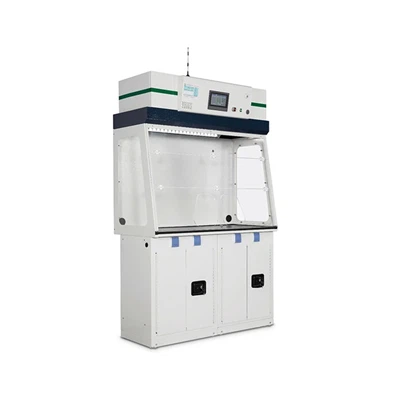
If you’re ready to find the right ducted fume hood size for your space, our team is here to help. We can review your layout, answer your questions, and guide you through the process to ensure you get exactly what you need for your laboratory or facility. Reach out to our team to start a conversation and get a tailored recommendation for your project.
Lab Tables References
ANSI Z9.5-2021, Laboratory Ventilation. American National Standards Institute, 2021.
OSHA Laboratory Standard (29 CFR 1910.1450), Occupational Safety and Health Administration, U.S. Department of Labor, 2023.
Fume Hood Performance and Selection Guidelines, American Industrial Hygiene Association, 2022.
HAMECC(Shanghai) Lab Solutions Co., Ltd.
We’re well-known as one of the leading ducted fume hoods manufacturers and suppliers in China, featured by quality products and good price. Please rest assured to buy customized ducted fume hoods made in China here from our factory.
Address: Building 1, No.2222, Huancheng Road, Jiading District, Shanghai
E-mail: info@hamecc.com
WebSite: https://www.hamecc.com/
