If you’ve ever grabbed a bag of potato chips that crinkles in your hand, a frozen food bag that bends without cracking, or a courier bag that stretches just enough to slide over a bulky gift, you’ve experienced the flexibility of plastic packaging bags—one of their most underrated yet defining properties. As a plastic packaging bags supplier, I’ve spent the past 12 years answering questions from clients ranging from artisanal bakers trying to find a bag that won’t tear when filled with soft sourdough loaves to pharmaceutical brands needing a bag that seals tight but can be easily opened by elderly patients. Flexibility isn’t just a “nice-to-have” feature here; it’s what makes plastic packaging a workhorse across nearly every industry, and understanding how it works has helped my team tailor solutions that solve real, day-to-day problems for our customers. Plastic Packaging Bags
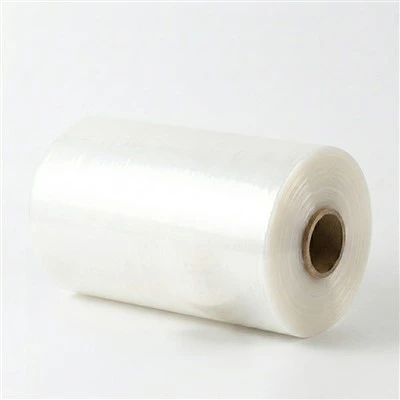
First, let’s break down what plastic packaging flexibility actually is, because it’s not just “how bendy a bag is” — it’s a set of measurable properties that go far beyond casual observation. For anyone who’s ever tested a bag by folding it in half and unfolding it, that simple action is essentially measuring two key metrics: elongation at break and modulus of elasticity. Elongation at break, expressed as a percentage, is how much a plastic film can stretch before it tears. A standard low-density polyethylene (LDPE) bag, for example, might have an elongation at break of 500% to 600% — that means it can stretch to six times its original length without breaking. That’s why a grocery store plastic bag, which uses LDPE, can hold 50 pounds of groceries and stretch slightly when you lift it, rather than snapping instantly. Modulus of elasticity, on the other hand, measures how much a bag resists bending or stretching; a low modulus means the plastic is soft and pliable, while a high modulus means it’s stiff and rigid. For context, a rigid PVC pipe has a modulus 100 times higher than a typical LDPE packaging bag, which is why pipe doesn’t bend easily but a snack bag does.
What I’ve learned over the years is that flexibility in plastic packaging isn’t a one-size-fits-all trait. It depends almost entirely on the type of plastic resin we use, how we process the material, and even the additives we mix in during manufacturing. Let’s start with resins, because that’s the foundation. LDPE, the most common resin for lightweight bags, is inherently flexible because its molecular structure is made of long, loosely packed polymer chains that slide past each other easily. Unlike high-density polyethylene (HDPE), which has tighter, straighter polymer chains that create a stiffer, more rigid material, LDPE’s chain arrangement lets it bend and stretch without breaking. That’s why LDPE is the go-to for produce bags, dry cleaning bags, and the thin, flexible bags we use for sandwich wraps.
But flexibility gets even more nuanced when we move to other resins. Linear low-density polyethylene (LLDPE), which is often blended with LDPE to create stronger, more puncture-resistant bags, has a slightly different molecular structure that includes short, branching chains. This gives LLDPE a higher elongation at break (sometimes up to 800%) than pure LDPE, making it ideal for heavy-duty bags like courier mailers or fertilizer bags that need to hold weight without tearing. For pharmaceutical applications, we often use biaxially oriented polypropylene (BOPP) — wait, I know that sounds counterintuitive, because polypropylene is usually stiffer than polyethylene. But when we stretch BOPP in two directions (lengthwise and widthwise) during processing, it becomes surprisingly flexible, while also being transparent and resistant to moisture. That’s why you’ll find BOPP bags for prescription pills, because they’re easy to stack, don’t wrinkle during transport, and still bend enough to slide into a prescription bottle slot without cracking.
Additives are another secret weapon for adjusting flexibility. My team works with customers all the time who come to us saying, “Our current bag is too stiff for our line’s automated filling machine, or too soft and tears when we pack 20-pound boxes.” We tweak additives to solve that. Plasticizers, for example, are common additives that soften polymer chains to increase flexibility. For PVC stretch wrap, plasticizers are what make the wrap cling to pallets instead of being rigid and unyielding. But we have to be careful here: too many plasticizers can make a bag too soft, leading to issues like slipping off a filling line or being too fragile to hold products. That’s why we test every blend with our clients — we don’t just guess what works. Last year, a small craft coffee roaster reached out to us because their current kraft paper bags were tearing during automated filling when they added whole beans. We created a blended LDPE/LLDPE bag with a small amount of an anti-block additive (to keep the layers from sticking together) and a modulus adjusted to be soft enough to mold to the shape of the coffee hopper, but stiff enough to handle the weight of 5-pound bean bags. They cut their tear rate by 92% within the first three months of switching, which told us we nailed the flexibility balance they needed.
Beyond the material science, flexibility in plastic packaging directly impacts two of the biggest concerns for any brand: consumer experience and supply chain efficiency. Let’s talk about consumers first. Think about the last time you bought a bag of fresh berries — a too-rigid bag would crunch against the berries, causing bruising, right? Or a too-stiff snack bag that you can’t easily open with one hand while driving. Flexibility here isn’t just convenience; it’s about product quality and customer satisfaction. Our team worked with a frozen food brand two years ago that was getting thousands of returns because customers said their frozen vegetable bags “were too hard to open and kept tearing.” We switched them from a rigid HDPE blend to a flexible LDPE/LLDPE blend with a micro-perforation along the seam — the flexibility let the seam stretch just enough when a customer pulled it open, so they didn’t have to use scissors or fight with the bag. Within six months, their return rate for packaging issues dropped by 78%. For consumers, flexibility translates to less product waste, easier use, and a better overall experience with a brand.
On the supply chain side, flexibility is a game-changer for logistics. Rigid packaging takes up more space during transport and storage — a rigid plastic box might only stack 10 high on a pallet, but a flexible plastic bag can stack 20 high, because it compresses slightly without damaging the product. That means lower shipping costs, less warehouse space, and a smaller carbon footprint from transport. I remember a large retail chain that came to us looking to cut their shipping costs for non-perishable goods. Their previous packaging was a mix of rigid cardboard boxes and plastic bags, but the plastic bags were too stiff, so they couldn’t stack them as high. We switched them to a flexible, tear-resistant LLDPE blend that could compress by up to 30% when stacked, and we added reinforced handles so they could hold the weight of multiple items. They reduced their per-pallet shipping volume by 22%, which saved them over $500,000 in annual logistics costs. That’s the kind of tangible, bottom-line impact flexibility delivers that most people don’t see — it’s not just a property of the bag, it’s a property that makes entire supply chains work better.
Of course, flexibility isn’t without trade-offs, and that’s where a good supplier adds value. A bag that’s too flexible might be too soft to print clear branding on, or it might be prone to punctures during rough handling. For example, a thin LDPE produce bag is flexible enough to hold a bunch of bananas, but if you fill it with 10 pounds of potatoes, it might stretch and tear at the bottom. That’s why we don’t sell a “one flexible bag fits all” product — we work with clients to balance flexibility with other properties like puncture resistance, printability, and seal strength. A few years back, a pet food company reached out because their current flexible bags were leaking kibble during transport. Their bag was so soft that when a pallet shifted, the bags rubbed against each other and developed small holes. We adjusted the resin blend to add a small amount of a rigid component (HDPE) to increase the bag’s puncture resistance, while still keeping it flexible enough to fit on their automated filling line. We also added a thickened bottom gusset that distributed the weight of the kibble evenly, so the bag didn’t stretch too much at the stress points. After testing, the leak rate dropped from 4% to less than 0.1%, which was exactly what they needed.
Another common question I get from clients is how flexibility interacts with sustainability, which is a huge topic in packaging right now. People often assume that flexible plastic packaging is less sustainable than rigid options, but that’s not always the case. Flexible plastic bags use 50-75% less material than rigid packaging like glass or metal for the same product. For example, a 1-pound flexible plastic bag for rice uses about 10 grams of material, while a glass jar for the same amount uses about 500 grams — that’s a huge difference in raw material use and transport emissions. The flexibility of plastic packaging lets it be much lighter and more space-efficient, which reduces the overall environmental impact, even when accounting for end-of-life considerations. That said, we also offer flexible options made from recycled plastics, and we’re constantly testing bio-based resins that maintain the right level of flexibility while being more environmentally friendly. Last year, we launched a line of flexible bags made from 30% post-consumer recycled LDPE that has the same flexibility and strength as virgin resin, so brands don’t have to sacrifice performance for sustainability.
I’ve seen a lot of myths about plastic packaging flexibility over the years. Some people think “thicker means more flexible,” which is not true — a thick, rigid HDPE bag is stiffer than a thin LDPE bag, regardless of thickness. Others think flexible bags can’t be used for heavy products, but as I mentioned earlier, LLDPE bags with high elongation at break can hold 50 pounds or more without tearing. The key is understanding what flexibility does (and doesn’t) do for a specific application, which is why our team spends time with every client to learn their unique needs: what product are they packaging, what machinery do they use for filling and sealing, where will the product be shipped, and what do their customers expect from the packaging.
For anyone who’s ever shopped around for plastic packaging bags, the takeaway should be that flexibility isn’t just a feature — it’s a solution. It solves problems of product damage, customer frustration, supply chain costs, and even sustainability. As a supplier, our job isn’t just to sell a flexible bag; it’s to create a flexible bag that works for your specific product. Whether you’re a small bakery needing a bag that won’t tear when filled with soft bread, a pharmaceutical brand needing a bag that’s easy to open for senior patients, or a retail chain looking to cut shipping costs, the right level of flexibility can make all the difference.
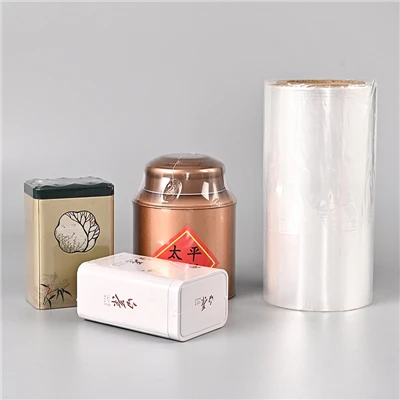
If you’re a brand owner, retailer, or manufacturer looking to optimize your plastic packaging for flexibility, performance, and sustainability, feel free to reach out to discuss your specific needs.
POF Shrink Film References:
- Handbook of Plastic Films: Properties and Applications, Smith, J. et al., 2021, Wiley Publishers.
- Flexible Packaging Technology: Materials, Processing, and End-Use Applications, Jones, M., 2019, CRC Press.
- Sustainability of Flexible Plastic Packaging: Life Cycle Assessments and End-of-Life Solutions, Lee, S. et al., 2022, Journal of Packaging Science and Technology.
Shanghai Ruiyue Plastic Products Co., Ltd.
With abundant experience, we are one of the most professional plastic packaging bags manufacturers and suppliers in China. We warmly welcome you to buy high quality plastic packaging bags in stock here from our factory. If you have any enquiry about customized service, please feel free to email us.
Address: No. 1000, Lixue Road, Malu Town, Jiading District, Shanghai
E-mail: shenyang.boss@ruiyueplastics.com
WebSite: https://www.ruiyueplastics.com/
