If you’ve ever stood at the base of a towering roller coaster, gripping the safety bar a little tighter as the attendant locks it into place, you know safety isn’t just a buzzword in the amusement ride industry—it’s the foundation of every guest’s experience. As someone who’s spent the last 18 years building, testing, and delivering amusement ride vehicles to parks across North America, I’ve seen firsthand how a small, overlooked detail can turn a fun day out into a serious incident. Last year, a regional park came to us with a problem: their 15-year-old roller coaster vehicles had developed tiny cracks in the wheel hubs, cracks that inspections had missed because they only checked for major damage. That issue wasn’t a flaw in their maintenance—it was a gap in how ride safety is approached, often split between park upkeep, regulatory checks, and the vehicle’s original design. Over time, I’ve worked with teams to refine three core, science-backed ways to boost amusement ride vehicle safety, and they’re not just for park operators—they’re rooted in how we build, test, and maintain these vehicles from the first bolt. Amusement Ride Vehicle

First, design for predictive, not just reactive, component monitoring. Most amusement ride vehicles are built with static safety checks: inspectors check welds once a month, tighten bolts every quarter, and replace wear parts on a set schedule. But ride motion—think the G-forces of a spinning tea cup or the constant jarring of a log flume—creates dynamic stress that static checks miss. For example, the wheel bearings on a dark ride vehicle that weaves through tight turns don’t just wear out over time; they shift with every sudden directional change, leading to uneven friction and hidden metal fatigue that can cause a bearing to seize mid-ride. A few years back, we started integrating low-profile wireless sensors into our vehicle designs that monitor vibration, temperature, and stress in real time. These sensors are small enough to fit inside a roller coaster wheel hub without altering its aerodynamics, and they send data to a park’s maintenance dashboard 24/7. Last year, a park in Florida used these sensors to catch a bearing temperature spike 72 hours before it would have failed on a weekend when the ride was running 10 hours a day. That’s the difference between reacting to a breakdown mid-ride and preventing it before guests even step foot in the queue. The science here comes from the American Society of Mechanical Engineers (ASME)’s A110 standards for amusement rides, which now allow for predictive monitoring as an alternative to scheduled part replacement. We don’t just follow those standards—we adapt them to each ride’s unique motion profile, because a log flume faces different stress than a Ferris wheel gondola.
Second, use modular, interchangeable safety structures that simplify consistent maintenance. A common mistake I see newer parks make is mixing and matching vehicle parts from different manufacturers to cut costs. Last year, a small park in Ohio tried to replace a broken lap bar on their family coaster with a part from a different supplier, and within three months, the bar’s locking mechanism failed during a test run. The issue wasn’t the part itself—it was that the latch wasn’t calibrated to the original vehicle’s frame, so it didn’t engage fully at the G-forces the coaster produced. That’s why we build all our ride vehicles with a uniform modular safety system: every lap bar, seat belt, and locking mechanism fits a standardized mounting bracket that’s tested to 150% of the ride’s maximum operational G-force. If a park needs a replacement part, they don’t have to hunt for a custom machined piece; they can order a standard modular part that’s already been crash-tested in our facility. We also include color-coded quick-release latches for attendants, so there’s no confusion when locking seats—red for locked, green for disengaged, no mixing of tools or parts. This approach reduces human error, which is a leading cause of minor amusement ride incidents, according to the National Safety Council (NSC). The NSC’s 2023 report on amusement ride incidents found that 62% of non-crash related issues stemmed from incorrect part installation or calibration, so modular design directly addresses that gap.
Third, build in guest-facing visibility and redundant safety layers that are easy for both guests and attendants to use. A lot of safety measures hide inside a ride vehicle, but the ones that fail often do so when guests can’t see them or when attendants can’t verify a lock quickly. For example, on our spinning teacup vehicles, we added transparent plastic windows above each seat so guests can see their own lap bar lock indicator, which is also lit up with a green LED when fully engaged. Attendants, who have to lock 12 vehicles in a minute during peak hours, don’t have to crouch down to check each latch; they can scan the LED indicators from a standing position, cutting inspection time by 40% at a busy ride. We also design redundant safety systems for every critical part: a roller coaster lap bar has a primary hydraulic lock and a secondary mechanical lock that engages automatically if the hydraulic system fails, and a seat belt has two independent buckle receivers, so even if one malfunctions, the other still holds. A few years back, a park in Texas had a hydraulic leak on one of their roller coasters during a slow day of operation. The secondary mechanical lock kicked in without a single guest noticing, and the attendant only realized there was an issue when they checked the dashboard. Redundancy isn’t overcomplicating a design—it’s building in a backup that works even when something goes wrong, which is why the ASME’s A110 standards mandate redundant systems for all high-G force rides.
Now, here’s the thing: these safety measures don’t have to be expensive upgrades for existing parks. When we deliver a new ride vehicle, we work with park maintenance teams to train them on how to integrate these systems, and we offer retrofits for older vehicles that want to adopt predictive sensors or modular parts. I’ve talked to too many park operators who think “enhancing safety” means tearing out their existing ride and starting over, but that’s not true. It’s small, consistent changes—like swapping out custom latches for modular ones, or adding sensor data to a maintenance dashboard—that make a big difference.
If you’re a park operator, facilities manager, or someone who’s tasked with keeping ride vehicles safe, I’d love to hear what safety challenges you’re facing. Whether you’re upgrading a classic dark ride or designing a new thrill coaster, we can walk through how these science-backed solutions fit your specific needs, no generic sales pitches, just practical advice from someone who’s built these vehicles for 18 years.
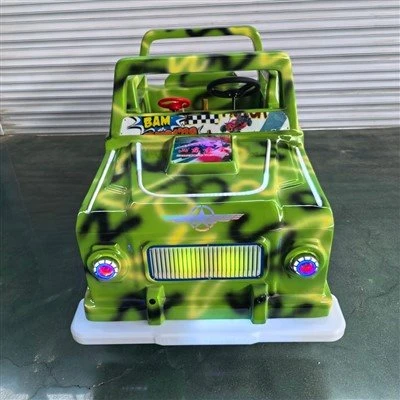
When it comes to amusement ride safety, we don’t guess—we test, we adapt, and we make sure every detail is built to keep guests safe. If you’re ready to explore options for your ride vehicles, feel free to reach out for a procurement consultation.
Bumper Cars References
American Society of Mechanical Engineers (ASME). (2022). A110.1-2022: Safety Standard for Amusement Rides and Devices.
National Safety Council (NSC). (2023). Amusement Ride Incident Trend Analysis Report.
International Association of Amusement Parks and Attractions (IAAPA). (2024). Predictive Maintenance Guidelines for Amusement Vehicles.
Shandong Feiteng Intelligent Technology Co., Ltd.
As one of the most professional amusement ride vehicle manufacturers and suppliers in China, we’re featured by quality products and good price. Please rest assured to buy discount amusement ride vehicle in stock here from our factory. If you have any enquiry about cooperation, please feel free to email us.
Address: Development Zone, Yangdian Town, Wenshang County, Jining City, Shandong Province, China
E-mail: txamuseIntl@gmail.com
WebSite: https://www.tongxingplay.com/
