Hey folks, welcome back to the diesel centrifugal pump blog—this is Javi, one of the guys here who’s actually around the pumps every single day (no stuffy office meetings over here, promise). Lately, I’ve been getting so many DMs and calls from folks who’ve just bought a diesel centrifugal pump and are stuck on one really basic, but super important question: “What size fuel tank do I need for this thing?” I get it, fuel tanks aren’t the most exciting part of a pump setup, but mess this up and you’re looking at mid-shift shutdowns, lost money, and way too many awkward trips to fuel up in the middle of a job. Diesel Centrifugal Pump
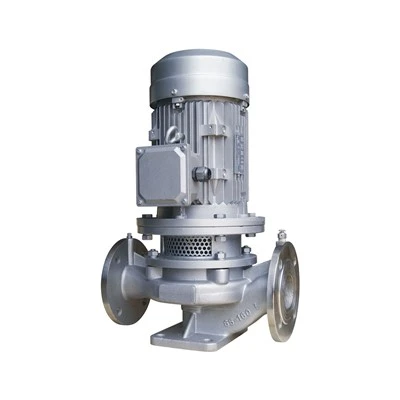
First off, let’s cut through the jargon—when I say “diesel centrifugal pump,” I’m talking about the ones we sell: the workhorses for water transfer, dewatering, construction sites, agriculture, even emergency fire backup. These pumps run on diesel, so their fuel needs aren’t the same as a car or a generator. If you grab a tank that’s too small, you’re recharging fuel every 4-6 hours if it’s running nonstop. Too big, and you’re hauling around extra weight that’s just dead space—perfect for a small job, bad for a job where you’re moving the pump every few days.
Let’s start with the biggest number you need to nail here: the pump’s fuel consumption rate. This isn’t pulled out of thin air, by the way—we test every single pump we ship to get this exact number. For most of our standard diesel centrifugal pumps, that rate is about 0.1 to 0.3 gallons per horsepower per hour. Wait, let’s make that easy. If you’ve got a 50 HP pump, that’s 5 to 15 gallons of fuel every hour it’s running. A 200 HP pump? That’s 20 to 60 gallons per hour. See why the tank size changes so much with pump size? A lot of folks skip this step and just guess based on what their old pump used—bad move, every pump model is different, even if the HP is the same.
Next, you have to figure out how long the pump’s actually going to run. I know, some jobs are straightforward: a small construction dewatering job that only needs the pump for 8 hours a day, 5 days a week. Others? Like a mining site or a flood response setup, that pump might run 24/7 for weeks. So let’s break this down into two real-world scenarios we see every month.
First scenario: intermittent use. Let’s say you’re a small farmer using a 30 HP diesel centrifugal pump to move water from a well to your crop fields. You run it for 4 hours a day, 3 days a week during planting season. Your fuel consumption here is 3 to 9 gallons an hour (30 HP times 0.1-0.3). If you only need 4 hours of run time, that’s 12 to 36 gallons total. Wait, but hold on—you don’t want to run the tank bone dry, right? Most pumps need at least 10% of the tank left as a buffer to avoid sucking in air, which kills the impeller (we’ve fixed way too many of those calls). So for the intermittent farmer, a 50-gallon tank is perfect. It holds that 12-36 gallons you’ll actually use, plus the 5-gallon buffer, and it’s light enough to move around the farm when you need to. You don’t want a 100-gallon tank here—towing that around a dirt field is a hassle, and you’ll end up with half the tank sitting unused, weighing you down.
Second scenario: continuous use. This is the big one for guys on construction sites, municipal dewatering, or emergency response. Let’s take a 150 HP diesel centrifugal pump running 24/7 for 10 days straight to drain a foundation. Your consumption here is 15 to 45 gallons an hour. Over 10 days, that’s 3,600 to 10,800 gallons. Wait, that’s a huge number—but let’s be real, you’re not gonna haul a 10,000-gallon tank around a construction site. Most people go with a mid-sized tank here, like 500 to 1,000 gallons, and schedule fuel deliveries every 2-3 days. Why? Because hauling a 1,000-gallon tank on a flatbed is way more practical than dragging a 10,000-gallon one, and you don’t want to tie up your fuel budget in extra diesel sitting in a tank (diesel does degrade over time, by the way—we’ll talk about that later). I’ve seen guys try to run a continuous job on a 100-gallon tank and get stuck when they forgot to fuel up on a Saturday, when the fuel yard’s closed. That’s a $10,000 job delay over a $50 tank mistake.
Wait, another thing we always tell customers: don’t forget the pump’s idle time. A lot of folks calculate fuel for full load, but half the time the pump’s not running at 100%—it might be idling while waiting for material, or adjusting water flow. Idling uses about 30% less fuel than full load. So if your pump idles for 20% of its run time, you can shave 20% off your total fuel needs. That’s a easy way to size the tank a little smaller than your initial calculation, no extra hassle.
Now, what about common mistakes we see all the time? Let’s list ‘em out, because these are the ones that cost you money. First, buying a tank that’s too small. I had a customer last month with a 100 HP pump running a flood cleanup job—he grabbed a 50-gallon tank because it was cheap, and he ended up running out of fuel mid-job, had to rent a temporary pump at $1,500 a day, plus a late fee to the job site. Total cost way more than if he’d just gotten a 200-gallon tank in the first place. Second, buying a tank that’s too big. Another customer, a small landscaper, had a 20 HP pump for small pond jobs—he got a 300-gallon tank because he thought “more is better,” but the tank weighed 800 pounds empty, so his pickup couldn’t tow it without modifying the hitch. Total waste of money, plus he had to sell the tank for half price. Third, not accounting for fuel degradation. Diesel goes bad after about 6 months, right? So if you’re not using the pump regularly, don’t overfill the tank. A full 500-gallon tank sitting for a year turns into a sticky, gunked-up mess that clogs the fuel filter. We recommend only filling the tank to 70% if you’re gonna leave it unused for more than a month.
Wait, let’s get specific with numbers to make this super easy. Let’s make a quick cheat sheet based on the pumps we sell:
- 10 HP diesel centrifugal pump: ~1-3 gallons per hour. Best tank size: 20-50 gallons. Perfect for small yards, tiny dewatering jobs.
- 50 HP pump: 5-15 gallons per hour. Best tank size: 50-150 gallons. Construction jobs, small agricultural wells.
- 150 HP pump: 15-45 gallons per hour. Best tank size: 500-1,000 gallons. Large construction, mining, municipal work.
- 300 HP pump: 30-90 gallons per hour. Best tank size: 1,500-3,000 gallons. Industrial dewatering, long-term flood response.
That’s just a baseline, though—always adjust for your run time. If you run a 50 HP pump 8 hours a day, 5 days a week, that’s 200-600 gallons a week, so a 100-gallon tank is enough (plus the buffer). If you run that same 50 HP pump 24/7, that’s 1,200-3,600 gallons a week, so you need a 1,000-gallon tank with a fuel delivery every 3 days.
Another quick tip: check the tank’s compatibility with your pump. Not all tanks work with all diesel centrifugal pumps. We sell our pumps with custom tank connections that prevent air leaks, which is a big one. A lot of generic tanks have loose fittings that let air into the fuel line, causing the pump to sputter or stop. That’s another reason to talk to us directly—we make sure your tank and pump work together, no guessing.
Wait, do you have a portable vs. stationary pump? That’s another factor. If your pump is on a trailer, you need a tank that’s designed to be towed—so it has reinforced sides, no seams that can leak when bouncing down dirt roads. Stationary pumps can have bigger, heavier tanks since they’re not moving. I’ve seen portable tanks blow a seal because they weren’t built for highway speed bumps—don’t cut corners on tank construction if you’re moving the pump around.
Let’s wrap this up with a real story, because that’s the stuff that sticks. Last summer, we sold a diesel centrifugal pump to a guy doing a foundation pour in rural Texas. He initially tried to use a 100-gallon tank, but after we walked him through the numbers, he went with a 250-gallon portable tank. He ran the pump 18 hours a day for 6 days straight, no fuel issues, no shutdowns. If he’d stuck with his original 100-gallon tank, he would’ve run out of fuel twice, delayed the job by at least a day, and cost himself $2,000 in lost time. That’s exactly why we do this—we don’t just sell pumps, we help you set them up right.
If you’re still confused, or you’ve got a specific pump size and job in mind, don’t guess. Shoot us a message, tell us what your pump is for, how long you’ll run it, and we’ll hook you up with the exact tank size you need. No sales pitches, no jargon, just straight answers from guys who’ve been in your shoes. We don’t want you stuck with a pump that doesn’t work because you messed up the tank size—we want you to get the job done, on time, without extra hassle.
Sewage Pump References:
- Hydraulic Institute. (2021). Pump Fuel Consumption and Sizing Guidelines for Diesel-Driven Centrifugal Pumps. Pump Systems Matter Publication.
- American Petroleum Institute. (2020). Diesel Fuel Storage and Degradation Best Practices for Industrial Equipment. API Publication 1595.
- Construction Industry Institute. (2022). Mobile Dewatering Pump Setup and Fuel Management. CII Research Report 373.
Zhejiang Kaicheng Pump Valve Co., Ltd.
Zhejiang Kaicheng Pump Valve Co., Ltd. is one of the most professional diesel centrifugal pump manufacturers and suppliers in China, also supports customized service. We warmly welcome you to buy advanced diesel centrifugal pump made in China here and get quotation from our factory. For price consultation, contact us.
Address: No.501 Zhangbao North Road, Dong ou Industrial Park, Oubei town, Yongjia, Zhejiang Province, China
E-mail: sales@cnkcmp.com
WebSite: https://www.kcmpumps.com/
