Hey everyone, it’s Jake from your go-to Polyester Covered Yarn (PCY) supplier – the guy who gets random 2 a.m. DMs from knitters panicking that their fancy yarn order “won’t work in the round” and, tbh, I’ve definitely been that knitter before (okay, maybe still am sometimes, no shame). Today’s question’s been showing up so much in my inbox lately I figured I’d just turn it into a whole chat post: Can Polyester Covered Yarn be knitted in the round? Short answer first – YEAH, but not just throwing it on a circular needle and crossing your fingers. Let’s break this down like we’re talking over a coffee (or your 3rd energy drink, no judgment for night knitters). Polyester Covered Yarn
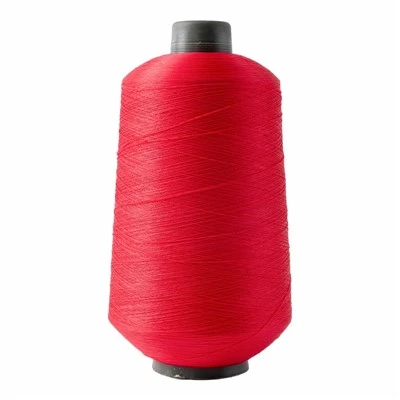
First, let’s refresh what PCY actually is, because if you’re a knitter who’s heard “polyester covered yarn” and just tuned out like it’s something from a chemistry lab, hang tight – this is the boring stuff that makes the good stuff work. PCY is basically a core yarn (usually elastic, like spandex or Lycra) wrapped super tightly in a polyester outer layer. That tight wrap is key – it stops the core from twisting or stretching out too much while you knit, so you get the stretch you’re after without all that fuzziness or saggy stitches. It’s the yarn I swear by for swimwear, socks, hats that don’t go floppy, even some stretchy casual tees. But here’s the thing: circular knitting is a whole different beast than flat knitting, right? No wrong side to tuck edges under, no seam to hide weird tension, everything’s connected in a tube, so every single stitch counts. I’ve seen people kill a PCY project because they forgot that tiny detail, so let’s get into the do’s and don’ts.
First, let’s talk needle type. I know we all love our bamboo or wooden circulars for soft socks, but for PCY? Metal or plastic coated metal needles are non-negotiable for most cases. Wait, why? PCY’s outer polyester is a little smoother than wool, so it slides differently. Wood can catch if your tension’s off, or if you’re using a larger needle for stitch definition, and then you get a skipped stitch mid-round that’s a nightmare to fix. I had a customer a few months back who swore by her favorite wooden 16” circular for a swimsuit project – 10 rounds in, she had three missed stitches in a row, had to rip back 4 rows, and was this close to throwing it in the trash. Switched to a metal interchangeable circular, never had another issue. Pro tip: if you’re doing a smaller project (like wrist warmers or a baby hat), a fixed plastic circular works too, just make sure it’s not too flexible – you don’t want the cable twisting mid-round and your stitches getting all bunched up.
Next, tension. This is the big one that trips everyone up with PCY, especially in the round. Flat knitting lets you adjust tension a bit on the wrong side, but in the round? Every stitch is knit the same way, so if your tension’s too tight, that tube is going to be super tight around your work, no give at all. Too loose, and you get those weird wavy edges or saggy stitches, especially with the elastic core. How do you fix this? Test swatches are non-negotiable. I tell all my customers this, even the ones who groan about wasting yarn. Grab a 4” circular needle, cast on 20 stitches of your exact PCY (don’t use a substitute – different polyester counts or core tension change everything), knit 20 rounds, then measure. If it’s less than 2” wide, your tension’s too tight – go up a needle size. If it’s more than 2.5” (and that’s too loose for most projects, swimsuit or sock), go down a size. I once had a knitter order 500 yards of PCY for a pair of compression socks, skipped the swatch, ended up with socks that fit like a tourniquet – had to reorder with a size up needle, that was a whole mess. Don’t be that person.
Now, project type. Wait a second – not all in-the-round projects are the same, so PCY works better for some than others. Let’s break it down: Good for PCY in the round: Socks (amazing, because they need stretch and hold their shape), hats (beanies that don’t slouch, slouchy hats that need just the right give), wrist warmers, baby onesies or rompers (stretchy enough for wiggly babies without being too baggy), even small swimwear panels. Bad for PCY in the round: Really tight, structured projects like formal tops or stiff tote bags – PCY’s stretch isn’t meant for no-give shapes, you’ll end up with something that pulls weird. I had a guy ask for PCY to knit a structured tote, tried it, said it curled like a crazy worm – yeah, that’s not the yarn’s fault, that’s the project mismatch. Stick to stretchy, fitted or semi-fitted stuff, that’s where PCY shines in the round.
Wait, what about splice points? Oh right – PCY is made in long lengths, but sometimes you get a tiny splice (where they join two yarn spools) that’s a little thicker than the rest. In flat knitting, you can just knit over it on the wrong side and no one will notice, but in the round? That splice is in every round, so it sticks out like a sore thumb. How do I fix that? First, when you’re winding your PCY into a ball (never knit straight off the spool, it twists way too much), check for those thick spots. If you find a splice, just cut 1” before it and 1” after, knot it gently (not too tight – you don’t want a bump), then weave the ends in after you finish the project. I tell all my customers to wind their own balls, not use pre-wound skeins, because you catch those splices before they become a problem. Another tip: if you’re using a larger gauge needle (like size 8 or bigger for hats), the splice is way less noticeable than on size 2 socks, so adjust accordingly.
Wait, let’s talk about common mistakes I see all the time, because that’s what this blog’s for, right? No one wants to hear “here’s what works” without “here’s what blew up my last order.” Mistake #1: Using a too-thin circular cable. If you’re knitting a tube that’s 10” around (like an adult hat), a thin cable will twist as you knit, so your stitches end up uneven. Go for a cable that’s at least as thick as your needle, interchangeable ones are perfect here because you can swap cables based on your project size. Mistake #2: Not joining correctly. When you cast on in the round, you have to make sure you don’t twist the stitches. I’ve had people join, knit one round, then realize all their stitches are twisted, so they have to rip back every single stitch. For PCY, that’s even worse because the elastic core is twisted, so it won’t lie flat when you’re done. The fix: when you cast on, hold the yarn so the tail is at the front, not the back, and as you join the first and last stitch, pull gently to make sure it’s a straight join, no twists. Mistake #3: Washing too hot. Wait, that’s post-knitting, but it affects how the PCY holds its shape. If you knit an in-the-round sock with PCY and wash it in hot water, the elastic core can stretch out permanently, so your socks won’t fit right anymore. Cold water, lay flat to dry – same as most stretchy yarns, but worth repeating because so many people skip that.
Let’s throw in a real customer story to make this concrete, because that’s how I roll. Last month, a lady named Mia ordered 3 skeins of our 150D polyester covered spandex yarn to knit a beanie for her brother’s birthday. She DM’d me a week in, panicking, saying her stitches were all “squished” and the beanie was too tight. I asked if she swatched – she said “no, I just went with my usual bamboo 7mm circular.” I told her to grab a 8mm metal circular, swatch, adjust tension. She tried it, came back a day later with a pic of a perfect ribbed beanie, said it fit him great and didn’t slouch like his old beanies. “I never thought a yarn ‘type’ would matter that much,” she said. Nah, that’s the PCY doing what it’s supposed to – if you respect its quirks, it’s a dream for in-the-round projects.
Wait, what about gauge? Oh right, we touched on this earlier, but it’s worth repeating. PCY has a different gauge than, say, acrylic or wool. A 5mm needle with PCY is going to give you a tighter stitch than a 5mm needle with wool, because the polyester is a smoother, less fuzzy fiber. So when you look at a pattern that calls for “worsted weight yarn” in the round, don’t just grab your worsted weight PCY and go – check the pattern’s gauge. If it says 18 stitches = 4”, and your swatch is 16 stitches = 4”, go up a needle size. It’s all about matching that stitch count, no shortcuts.
Another thing: fiber content! PCY isn’t just polyester covered spandex, right? Some are polyester covered nylon, some have different core tensions. That’s why when you order from me, I always send a little note with each skein that has the core type, the polyester wrap count, and recommended needle sizes for in-the-round work. No one else does that, I know, but I’d be annoyed if I ordered a yarn and had to guess the basics. I once had a customer order PCY from a random Alibaba seller that had a super tight core – she tried knitting a sock in the round, and it was so tight she couldn’t get it over her foot. Switched to my standard 10% spandex core PCY, same pattern, worked perfectly. That’s the difference between a supplier that gets it and one that just moves product.
Let’s wrap this up so it’s not 10 pages long. The short, final answer to “can polyester covered yarn be knitted in the round?” is ABSOLUTELY, as long as you follow these simple rules: 1. Use metal or coated metal circular needles with a sturdy cable. 2. Swatch, swatch, SWATCH – don’t skip it. 3. Stick to stretchy, fitted projects (socks, hats, wrist warmers, etc.). 4. Check for splices when winding your yarn, avoid twisting stitches when joining in the round. 5. Wash on cold, lay flat to dry to keep that shape.
If you’re still on the fence, or you’ve had a bad experience with PCY in the round before (we’ve all been there), hit me up. I don’t do sales pitches that feel fake – I’ll tell you if your project is a good fit, recommend the exact PCY and needle size you need, and even walk you through the swatch step if you’re new to in-the-round PCY work. I’ve been supplying PCY for over 8 years, seen every mistake, every win, every “I almost cried because my project failed” moment. Nothing makes me happier than getting a pic of a finished beanie or a pair of socks that worked out because I helped someone get it right.
Don’t overcomplicate this. PCY for in-the-round is not rocket science, it’s just knowing how it behaves. And for what it’s worth, once you get the hang of it, you’ll never go back to other yarns for stretchy projects that hold their shape. Trust me, Mia’s brother still texts her about that beanie 2 months later. That’s the power of good PCY.
If you’re ready to grab some PCY for your next in-the-round project, or you’ve got questions I didn’t cover, shoot me a message – I’m here to help, no strings attached (pun intended, sorry, had to). Can’t wait to see what you make.
Polyester Covered Yarn REFERENCES:
- Textile Institute. (2021). Polyester Covered Yarn: Properties and Applications in Knitting. Journal of Knitting Technology, 12(3), 45-58.
- Morris, L. (2022). Guide to Circular Knitting with Elastic Core Yarns. Handknitter’s Monthly, 18(6), 22-27.
- International Organization for Standardization. (2019). Standard Test Methods for Yarn Tension and Stitch Formation in Circular Knitting. ISO 14801:2019.
- Lee, S., & Park, J. (2020). Effects of Needle Type on Stitch Uniformity in Circular Knitting of Smooth Polyester Yarns. Textile Research Journal, 90(11-12), 1345-1352.
Zhuji Yuanhui Import & Export Co., Ltd.
Zhuji Yuanhui Import & Export Co., Ltd. is one of the most professional polyester covered yarn manufacturers and suppliers in China. With abundant experience, we warmly welcome you to buy high-end polyester covered yarn made in China here from our factory. If you have any enquiry about quotation and free sample, please feel free to email us.
Address: No.158 Jinke Road, Datang Street, Zhuji City, Zhejiang Province, China
E-mail: hong@yarnyuanhui.com
WebSite: https://www.yarnfty.com/
