If you’ve ever wondered how that “little box” tucked next to your main electrical panel does its job, let’s break it down—especially if that box is a T2 40KA Surge Protective Device (SPD). As a supplier of these units, I get questions all the time from electricians, building managers, and even DIY homeowners who want to stop guessing and start understanding how this gear actually works with their circuits. No stuffy tech jargon, just straight talk about the interaction between a T2 40KA SPD and your electrical system. T2 40KA Surge Protective Device
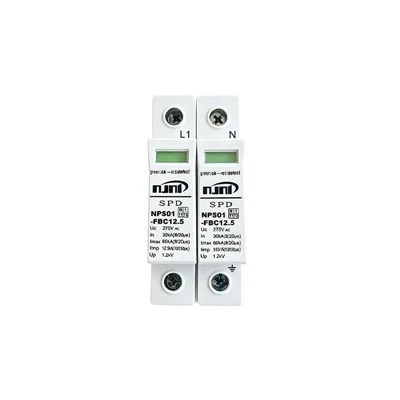
First, let’s get the basics out of the way: what even is a T2 SPD, and where does it live in your circuit? Electrical circuits aren’t just a loop of wires carrying power from your utility company to your outlets and appliances. They come with built-in protections—fuses, circuit breakers, GFCI outlets—but those are designed to handle overloads, not the big, sudden spikes that hit during a lightning storm, grid switching, or even just a heavy appliance kicking on. Those spikes, called surges, can range from a tiny 100-volt blip to a massive 20,000-volt jolt, and that’s where T2 SPDs step in. The “T2” designation is part of IEC (International Electrotechnical Commission) standards, which classifies SPDs based on where they’re installed in a building’s electrical system. T1 units are for the line side right at the utility meter, handling the biggest surges from direct strikes. T2 is for the load side, right after your main breaker panel, catching the smaller but still damaging surges that sneak through from the utility or come from inside your building. The “40KA” part is key too: that’s the maximum current (in kiloamperes) the SPD can safely divert during a single surge. For most residential, small commercial, and light industrial spaces, a 40KA rating hits that sweet spot—it’s not so overkill that it’s a waste of money, and not so weak that it can’t handle the surges most properties face.
Now, how does this thing actually interact with your circuit? Let’s walk through the flow step by step, because it’s not just a “plug and play” add-on—it’s a component that syncs with your existing wiring and protection gear. First, your main electrical circuit works on three wires (for most North American systems): a hot wire carrying 120/240-volt power, a neutral wire that completes the circuit back to the utility, and a ground wire that’s your safety net for stray current. A T2 40KA SPD isn’t connected just to the hot wire; it’s wired between hot and neutral, and also between hot and ground, and neutral and ground. That’s a 3-mode setup, which lets it catch surges no matter which part of the circuit they pop up in.
Here’s the interaction in action, during a surge. Let’s say a lightning bolt hits a utility transformer three blocks away. That sends a huge surge of extra current surging down the power lines to your house. Normally, your circuit breaker trips if there’s too much current, but a surge is way faster than a breaker can react—breakers take milliseconds to kick in, but a surge can destroy a $1,000 TV in microseconds. The T2 40KA SPD’s secret is a component called a varistor (or MOV, metal oxide varistor, for the tech folks who care). A MOV is basically a ceramic disc that acts like a normal resistor when voltage is steady, but when the voltage spikes above a set threshold (let’s say 1,200 volts for a 120-volt system), the varistor’s resistance drops to almost zero instantly. That means instead of the surge current traveling through your walls’ wires and into your expensive electronics, it zips through the varistor to ground, bypassing your stuff. The “40KA” rating means this varistor can handle up to 40,000 amps of surge current before it needs to be replaced. That’s not something every cheap SPD can do—cut-rate units often top out at 20KA, which means they’ll burn out fast if you get a big surge.
Wait, but what about smaller, internal surges? Those are the ones people don’t talk about as much, but they add up way faster. Think about your AC unit turning on, your electric water heater kicking a cycle, or even a neighbor’s power tool drawing heavy current. Every time a big appliance turns on or off, it creates a tiny back surge that bounces through your circuit. Over time, that adds up to thousands of those small surges, which add wear and tear to your appliances’ internal circuits, shortening their lifespan by years. A T2 40KA SPD catches those too, not just the massive lightning surges. I’ve seen so many customers tell me their fridges and TVs died a year early, and after installing a 40KA SPD, those same units are still going strong 5+ years later.
Now, let’s clear up a common myth: SPDs don’t prevent surges from entering your circuit—they divert the excess current to ground so it never reaches your devices. That’s a critical difference from surge protectors you plug into outlets (those are T3 SPDs, by the way). Plug-in surge protectors are for individual devices, but they’re not designed to handle the big surges that come through the main panel. A T2 unit is the first line of defense, acting as a “circuit-wide” buffer, while plug-ins are a second layer for your laptop or gaming console. The interaction here is layered: the T2 40KA SPD takes the brunt of the surge load, so the plug-ins don’t have to work as hard and won’t burn out as fast.
There’s another part of the interaction that’s easy to miss: how the T2 SPD works with your circuit breaker. Most people think these two are competitors, but they actually work together. Your main breaker is designed to cut off power if there’s a sustained overload, but a surge is a short, fast spike. The SPD’s job is to “clamp” the voltage to a safe level (usually around 400 volts for most residential systems) so that even if a surge is too big for the SPD to divert, the voltage never gets high enough to fry your devices. The 40KA rating here means the SPD can handle the surge without drawing too much current, which would trip your breaker unnecessarily. A lower-rated SPD would draw more current during a surge, causing nuisance trips that are a headache for homeowners and electricians.
Wait, but what about the ground wire? That’s the part people often get wrong. The T2 40KA SPD has to be properly grounded to work. If your ground wire is old, corroded, or too thin (smaller than 14 gauge for residential), the surge current won’t have a safe path to go to ground. That means it’ll bounce back into your circuit, instead of diverting, and that can cause damage. As a supplier, I always tell customers that installing a T2 SPD is only half the battle—you need to make sure it’s connected to a proper ground that meets local electrical codes. A lot of electricians skip checking that, but that’s why some people say SPDs don’t work: their installation was wrong.
Let’s talk about real-world use cases to make this concrete. A couple of months ago, I had a customer in Florida who had a direct lightning strike to his roof during a summer storm. The surge traveled through his attic wires, but his 40KA T2 SPD at the main panel diverted 90% of the current to ground. The only damage he had was a $20 smart thermostat that was plugged into a cheap plug-in surge protector—he’d skipped adding a plug-in for that, and the small unit couldn’t handle the leftover surge. If he’d had a lower-rated 20KA SPD, that main unit would’ve burned out too, and he’d have had to replace his HVAC system, which would’ve cost him $5,000 easy. That’s the difference a 40KA rating makes: it’s designed for the bigger surges that hit areas with lots of storms, or properties near power lines.
Another common question: do these SPDs need maintenance? Yeah, they’re not “set it and forget it” units. The varistor in the T2 40KA SPD wears down over time from small surges, so most good units have a status light that tells you when it’s time to replace it. Some newer models even have a remote monitoring feature that sends an alert to your phone when the unit is at the end of its life. The interaction with your circuit doesn’t stop when it’s installed; it’s a ongoing part of your electrical system, so checking that status light every year (during your annual panel inspection) is a small step that prevents big problems later.
Let’s also address the difference between T2 and other SPD types to clear up confusion. T1 is for the utility side, installed at the meter, handling up to 100KA. T2 is for the panel side, 40KA is the most popular because it works for almost every building size. T3 is the plug-in type, for individual devices. Mixing these up leads to bad installations: if you put a T3 unit in the main panel, it won’t have enough capacity to handle a surge, and it’ll burn out immediately. If you skip the T2 unit and only use T3 plug-ins, you’re leaving your whole building’s main circuits exposed. The T2 40KA SPD is the middle ground that balances capacity, cost, and coverage.
Now, for the technical folks who want a little more detail on how the varistor interacts with the circuit: the MOV’s voltage-resistance curve is non-linear, which is why it works. At normal operating voltage (120V), the MOV has a resistance of millions of ohms, so almost no current flows through it. When the voltage hits the “clamping voltage” (usually 350V-400V for 120V systems), the resistance drops to a few ohms, so thousands of amps flow through the varistor to ground. Once the surge is over, the voltage drops back to normal, and the varistor snaps back to its high resistance state, so your circuit goes back to operating like nothing happened. That quick switch is what makes the T2 40KA SPD so effective—its varistor can switch states in less than a nanosecond, which is faster than any surge can damage electronics.
I should also mention that local electrical codes often require T2 SPDs for new construction or major panel upgrades, especially in areas with high lightning activity. That’s because regulators have realized that the cost of an SPD is way lower than the cost of replacing a whole circuit or multiple appliances. As a supplier, I work with electricians all over to make sure they’re installing the right T2 SPDs for their jobs, not just the cheapest one they can find. The 40KA rating is a standard for most residential and light commercial, but for big industrial spaces, we also have 60KA and 80KA models, but those are less common for most people’s needs.
Wait, let’s tackle a common mistake people make: buying a cheap 40KA SPD off Amazon that’s not actually certified. A lot of those units don’t meet IEC 61643 standards, which is the standard for SPD performance. Their varistors are low-quality, so they’ll only handle a single small surge and then fail. A legitimate T2 40KA SPD will have certification labels, and as a supplier, I only stock units that pass third-party testing to make sure they actually deliver on their 40KA rating. That’s why it’s worth buying from a reputable supplier, not random online marketplaces—you don’t want to trust the protection of your whole circuit to a cheap knockoff.
Let’s wrap this up with a quick recap of how the T2 40KA SPD interacts with your circuit, to make it easy to remember:
- It’s installed after your main breaker, acting as a circuit-wide buffer for surges.
- It uses a varistor that only activates when voltage spikes, diverting excess current to ground.
- The 40KA rating means it can handle big surges (up to 40,000 amps) without burning out or tripping your breaker.
- It works with your existing circuit protection, not against it, to shield both your appliances and your main wiring.
- It needs a proper, code-compliant ground to do its job correctly.
If you’re a homeowner, electrician, or building manager looking to add a reliable layer of protection to your electrical system, a T2 40KA SPD is one of the best investments you can make. It’s way cheaper than replacing a fridge, TV, or HVAC system, and it keeps your whole circuit running smoothly for years.
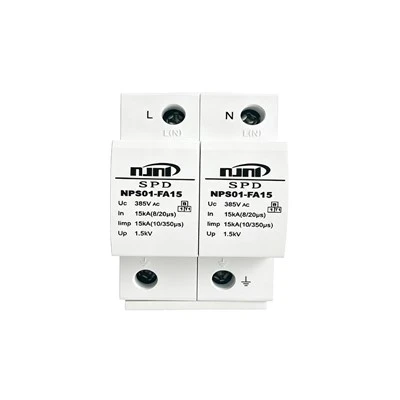
If you have questions about how a T2 40KA SPD would work with your specific electrical setup, or you’re ready to place an order, reach out to discuss your needs.
T1+T2 7KA Surge Protective Device References:
- IEC 61643-11:2018, Low-voltage surge protective devices – Part 11: Surge protective devices connected to low-voltage power systems – Requirements and test methods
- National Electrical Code (NEC) Article 285, Surge Protective Devices
- IEEE Std C62.41.2-2018, IEEE Recommended Practice on Surge Voltages in Low-Voltage AC Power Circuits
Nanjing Ningpu Lightning Protection Equipment Manufacturing Co., Ltd.
As one of the most professional T2 40ka surge protective device manufacturers and suppliers in China, we’re featured by quality products and good price. Please rest assured to buy customized T2 40ka surge protective device made in China here from our factory. Also, pricelist is available.
Address: Building 1, No.20 Shengyuan Road, Lishui Economic Development Zone, Nanjing City, Jiangsu Province, China
E-mail: 3796023563@qq.com
WebSite: https://www.npspd.com/
