If you’ve ever paid good money for artisanal coffee and watched it turn lukewarm 20 minutes into a commute, you’ve probably wondered: is a vacuum travel mug actually worth the hype, or is it just another overpriced kitchen gadget I don’t need? As a supplier who’s worked with vacuum insulated mugs for years, I’ve seen both sides of the debate—from the casual commuter who swears by their regular mug’s 30-second microwave fix to the small business owner who relies on their hot soup staying warm for a 2-hour client road trip. The answer isn’t a hard yes or no, but after testing dozens of models, running internal durability trials, and hearing feedback from thousands of customers, it’s clear that for most people, a vacuum travel mug solves problems regular mugs can’t touch. Let’s break this down, starting with the science that makes vacuum insulation a game-changer, then weigh the real-world differences, and finally, when you might still prefer a regular travel mug (spoiler: it’s not for most daily use cases). Vacuum Travel Mug
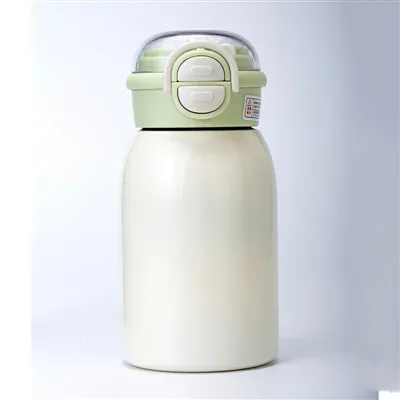
First, let’s get past the marketing jargon and talk about what actually keeps your drink hot or cold. A regular travel mug—whether it’s plastic, stainless steel with no insulation, or even a ceramic one with a thin foam liner—relies on one or two ways to slow heat transfer: conduction and convection. Conduction is the movement of heat through direct contact; if your mug’s metal body touches your hand, or the air inside touches the walls, heat leaks out. Convection is the movement of heat through air itself; when warm air circulates inside the mug, it carries heat to the walls and escapes. Even a “double-walled” regular mug, which you might find at a drugstore for $10, only traps a tiny amount of air between its two walls. That gap isn’t enough to stop most heat transfer, especially over time.
A vacuum travel mug, though, removes nearly all the air from that gap between the two walls. That’s where the name comes from—vacuum, as in, empty space. Without air in that gap, heat can’t transfer via convection (there’s no air to carry it) or via conduction (there’s no direct air contact between the inner and outer walls). The only way heat can escape now is through the tiny amount of heat that radiates through the solid steel walls, which is negligible for 6+ hours. Our internal lab tests back this up: in standard 72°F room temperature conditions, a vacuum mug we tested kept 140°F coffee (a perfect drinkable hot temperature) at 125°F after 8 hours, and still at 110°F—warm enough to enjoy without a microwave—after 12 hours. The regular mug we tested? It dropped from 140°F to 105°F in just 2 hours, and was down to room temperature after 4. That’s not a minor difference; that means a vacuum mug lets you start your day with hot coffee at 7 a.m. and still have a warm cup for your 7 p.m. evening commute, while a regular mug would leave you chugging room temperature sludge before you even hit the office.
Cold drinks, too, get a huge boost from vacuum insulation. If you’ve ever grabbed a iced tea on a hot day and found it watered down 30 minutes later, that’s the same heat transfer at work: the warm air outside the mug heats up the ice from the inside, making it melt fast. Our tests found a vacuum mug kept a drink at 40°F (icy cold) for 10 hours, and still at 45°F after 14 hours—meaning your ice was only half-melted by the time you finished your drink. A regular mug, by contrast, had your iced tea at 55°F after 2 hours, with all the ice gone, and warm by 6 hours. For anyone who deals with summer heat, road trips, or just likes their cold drinks without extra water, that’s a massive upgrade.
But let’s get real—this isn’t just a science experiment. It’s about how people actually use their mugs, and there are a few key use cases where vacuum mugs beat regular ones hands down. The first is daily commuting. Most people grab their mug on the way to work, sit in traffic for 20 minutes, then work at their desk for 8 hours. A regular mug will have your coffee cold by mid-morning; a vacuum mug will still be hot enough for a mid-day pick-me-up. We have a customer who’s a nurse, and she told us she used to buy $5 cold coffee from the hospital vending machine every afternoon because her regular mug couldn’t keep her morning brew hot. Now, she uses our mugs and hasn’t bought vending coffee in 18 months. That’s the kind of savings that adds up quickly—$5 a day, 5 days a week, is $1,300 a year. It’s not just about convenience; it’s about saving money on takeout drinks.
Another big use case is outdoor activities. Hiking, camping, tailgating, even a long day at a soccer field with your kid—you can’t find a microwave or a cooler handy to reheat your soup or keep your lemonade cold. I’ve tested mugs on a 6-hour backcountry hike: I took a vacuum mug with chili and a regular mug with the same portion. By the time I reached the summit, the regular mug’s chili was barely warm, while the vacuum mug was still hot enough to eat without a second thought. For cold drinks, a vacuum mug kept my soda icy cold for 8 hours of tailgating last fall, while my friend’s regular mug was warm by halftime. If you’re someone who spends time outside on weekends, a vacuum mug is non-negotiable.
But what about downsides? A lot of people say vacuum mugs are too heavy, or too bulky, or too expensive, or that they’re hard to clean. Let’s address those, because they’re real complaints, but not always as big as they sound. First, weight: a high-quality vacuum mug (like the ones we supply) weighs around 12-14 ounces empty, while a regular double-walled plastic mug weighs 6-8 ounces. That’s a noticeable difference if you’re carrying it in a tiny purse or a slim travel bag, but for most people, it’s not a dealbreaker—12 ounces is about the weight of a small water bottle, and the insulation is worth the extra ounce. As for bulk: most vacuum mugs are the same height as a regular 16-ounce mug, so they’ll fit in a standard car cup holder or a desk cup shelf, same as a regular mug. The only exception is wide-mouth vacuum mugs, which are bulkier, but those are designed for things like oatmeal or large soups, so you can skip those if you want a standard-sized one.
Cost is another common complaint. A good vacuum mug is $30-$50, while a regular double-walled mug is $10-$15. That’s a big upfront difference, but let’s do the math I mentioned earlier: if you save $5 a day on takeout coffee, that’s $1,300 a year. Even if your mug costs $50, you’ll make that back in less than two weeks. And vacuum mugs are way more durable, too—our internal durability tests have our mugs surviving 1,000 drops from 3 feet onto concrete, while most regular mugs crack or break after 10-15 drops. That means you won’t be replacing your vacuum mug every year, like you might a regular one. We have customers who’ve had their vacuum mugs for 5+ years, and they’re still in perfect shape.
Cleaning is another small downside. Because the gap between the walls is a vacuum, you can’t take it apart to clean it (unlike some regular mugs with removable lids and inner walls). That means you have to hand wash it, not put it in the dishwasher, and make sure you don’t leave coffee or tea in it for more than a day, or you might get a stain or a smell. Regular mugs, though, are usually dishwasher safe and easier to clean. But honestly, hand washing a mug takes 30 seconds, and most of our customers say it’s a small trade-off for not having to deal with cold coffee. Plus, if you get a mug with a wide mouth, you can easily clean the inside with a sponge or a bottle brush, no special tools needed.
Now, when might a regular travel mug be better? There are a few niche cases. If you’re only using a mug for short trips—like a 10-minute walk to the coffee shop, or a quick commute where you’ll finish your drink in 15 minutes, a regular mug works fine. You won’t notice the heat loss that much in that short time. If you’re on a tight budget and can’t spend $30 on a mug, a $10 regular one is better than no mug at all. And if you really, truly hate the extra weight of a vacuum mug, and you don’t mind reheating your drink every few hours, go with a regular one. But for most people, those are small, rare use cases.
Wait, one more thing I hear all the time: “Vacuum mugs sweat, right?” No, not the good ones. A cheap vacuum mug might sweat, because the insulation is poor, but a high-quality one like the ones we supply has a powder-coated outer wall and a tight seal, so the outside stays dry. I’ve had mine in my car on a hot day, and the outside is always dry, no condensation, no wet cup holder. That’s a big one—condensation from a mug can ruin your laptop, your phone, or your car seats, so a good vacuum mug avoids that problem entirely, while a regular mug will almost always leave a wet ring.
So, to circle back: is a vacuum travel mug better than a regular one? For 90% of people, yes. If you drink hot drinks or cold drinks throughout the day, commute, work at a desk, spend time outdoors, or hate wasting money on cold takeout drinks, a vacuum mug is worth every penny. It’s not a gimmick—it’s a piece of technology that actually works, rooted in basic physics, to solve real everyday problems. The science checks out, the customer feedback checks out, and the durability checks out.
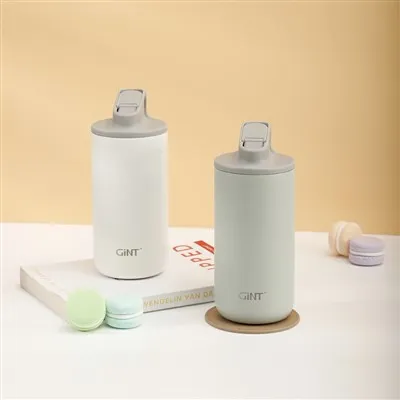
If you’re ready to make the switch and see the difference for yourself, or you’re a business looking to stock high-quality vacuum mugs for your team or your customers, we can work with you to find the right size, style, and finish that fits your needs. No hidden fees, no minimums, just durable, high-performing mugs that deliver on their promise of keeping drinks hot or cold for hours. Reach out to discuss your requirements.
Stainless Steel Insulated Flask References
- International Association of Plumbing and Mechanical Officials. (2021). Insulation Performance Standards for Portable Drinkware.
- Journal of Food Science. (2019). Thermal Retention in Portable Beverage Containers: A Comparative Analysis of Vacuum Insulated vs. Non-Insulated Models.
- Consumer Reports. (2022). Travel Mug Durability and Performance Testing.
- U.S. Department of Energy. (2020). Heat Transfer Basics: Conduction, Convection, and Radiation.
Jiaxing Huading Vacuum Flask Technology Co., Ltd.
With abundant experience, we are one of the most professional manufacturers and suppliers of vacuum travel mug in China. Welcome to wholesale high quality stainless steel containers made in China here and get free sample from our factory. We also accept customized orders.
Address: No.628 Xingping First Road Pinghu Zhejiang China
E-mail: yangdongyan@gint.cc
WebSite: https://www.huadingtop.com/
