If you’ve ever stood inside a steel livestock building during a storm, watched pigs huddle as a nearby tractor revved three times, or realized the noise of a new heifer’s first calf cries bounced so loudly they worried your neighbors might file a noise complaint, you’re not alone. For 12 years, I’ve run a steel livestock buildings supply company, and I’ve heard this question a hundred times from farmers, feedlot managers, and small-scale livestock owners: Are there sound-proofing options for these structures? Steel Livestock Buildings
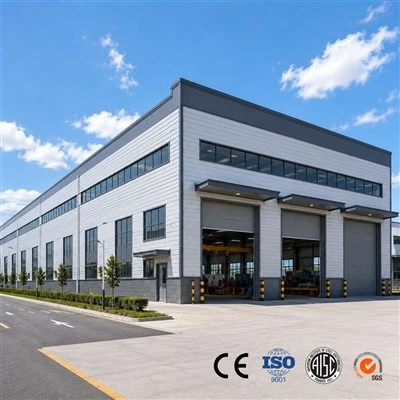
The short answer is yes, but it’s not the same as hanging foam panels in a home recording studio. Steel livestock buildings are built for durability, low cost, and resistance to rust, extreme weather, and the wear of daily livestock operations—so any sound-proofing fix has to work with, not against, those core needs. Let’s break down what works, what doesn’t, and what I’ve learned from working with hundreds of producers across the Midwest, Great Plains, and even parts of the South.
First, why are steel livestock buildings so noisy in the first place? Unlike wood frame or concrete block barns, steel has a smooth, dense surface that doesn’t absorb sound—instead, it reflects it. A sharp sound, like a gate slamming or a cow’s bellow, bounces off the ceiling, walls, and concrete floor dozens of times before fading, turning a small noise into a constant, echoing roar. For producers, that noise causes two big problems: first, livestock stress. Studies from the University of Nebraska’s Institute of Agriculture and Natural Resources have found that chronic noise over 85 decibels (about the volume of a lawnmower) increases cattle’s cortisol levels (the stress hormone) by 15 to 20%, leading to reduced feed conversion rates, lower weight gain, and even reduced milk production in dairy herds. Second, neighborhood noise complaints can lead to local regulations limiting building size or operation hours, which cramp how you run your business.
Now, let’s get to the solutions—starting with the ones we’ve installed most often for clients, because they balance sound reduction with steel building functionality.
The first and most accessible option is insulating the interior walls and ceilings with acoustic insulation, not the generic fiberglass insulation you’d use for a home attic. Wait, why does that matter? Generic insulation is rated for thermal resistance (R-value), which keeps heat in or out. Acoustic insulation is rated for Sound Transmission Class (STC) and Noise Reduction Coefficient (NRC), which measure how much sound it absorbs instead of reflecting it. For steel buildings, we use two types of acoustic insulation most often: fiberglass batts with a dense, faceless facing, and rigid mineral wool panels. Fiberglass is cheaper, easy to install between steel studs or purlins, and has an NRC of 0.7 to 0.8, meaning it absorbs 70 to 80% of sound that hits it. Mineral wool is more expensive, with a higher NRC (0.9 to 0.95), and it’s fire-resistant— a huge plus for livestock buildings, where hay, grain, and electrical equipment are common. I remember a client in Iowa who had 1,200 head of finishing hogs; he installed acoustic fiberglass on the ceiling and east wall of his barn last year. Before, during feeding time, the noise of pigs squealing and feed grinders was so loud he could barely hold a conversation with his hired hand at the barn office. After installation, the indoor noise level dropped from 92 decibels to 76—quiet enough that they didn’t have to raise their voices. That’s a tangible difference.
But insulation alone isn’t enough, especially if you’re dealing with sound that travels through the steel structure itself (called structure-borne noise). Sound doesn’t just move through air—it travels through metal frames, purlins, and even the concrete slab. For that, we add a layer of acoustic barrier on the interior side of the steel panels. An acoustic barrier is a dense, flexible sheet (usually made of vinyl or rubber) that blocks sound from passing through the steel. We attach it directly to the steel walls or ceiling, then cover it with metal trim or the finished interior paneling. A lot of producers worry this will make the building hotter in summer or colder in winter, but if you pair it with the right insulation, it doesn’t affect the thermal performance. In fact, adding an acoustic barrier can boost the STC rating of a steel wall from around 20 (which is like an open window) to 35, which is the equivalent of a concrete block wall. That means sound from inside the barn barely gets out, and outside noise (like traffic, farm equipment, or wind) barely gets in.
Another option, especially for buildings where you have open areas (like feeding alleys or holding pens) and enclosed offices, is adding acoustic wall panels. These are pre-made, lightweight panels that you hang on the interior walls, usually made of a wood fiber core wrapped in a durable, wipeable fabric—perfect for livestock, where hay dust, manure, and feed splatter are constant. They come in a range of NRC ratings, from 0.6 to 0.9, so you can pick the right one for your busiest areas. We often suggest these for smaller operations or for specific problem zones, like a milk parlor where noise from milking machines can be disruptive to both cows and workers. One of our dairy clients in Minnesota installed these panels in her parlor last spring; she told me the cows were calmer, and her workers didn’t come home with headaches anymore— that’s a win for animal welfare and employee retention, too.
Wait, what about the floor? Concrete floors are hard, so they reflect a lot of sound too. If you have a newer building, you can pour a rubberized underlayment before finishing the concrete, which absorbs impact noise from animals running or equipment being moved. For existing buildings, you can interlock rubber mats made specifically for livestock barns—they’re durable, easy to clean, and reduce impact noise by up to 50%. A client in South Dakota with a feedlot tried this in his holding pen area last year; before, the sound of cattle hooves slamming on concrete echoed so far that his neighbor, a horse breeder, complained the noise was spooking her foals. After installing the rubber mats, the complaint stopped, and he said his cattle were less likely to slip and get injured during feeding.
Now, let’s talk about what doesn’t work. A lot of people tell me they tried hanging curtains or sheets on the walls, thinking that would absorb sound. While that’s true for a little bit of air noise, they don’t reduce structure-borne noise at all, and they’re not durable enough for livestock buildings—dust, manure, and animal curiosity will destroy them in a few months. Generic home insulation also doesn’t work; we had a client a few years ago who used fiberglass batts meant for his house attic, and he said it only reduced noise by about 5 decibels—barely noticeable. It didn’t have the acoustic rating to stand up to the constant, loud sounds of a livestock building. And don’t waste money on foam panels that aren’t rated for acoustic use—most of the foam sold for walls is for insulation, not sound absorption, so it won’t make a difference.
I’ve also learned that when we work with clients, the biggest mistake they make is thinking they have to sound-proof the entire building. You don’t—just the high-noise zones: feeding areas, milk parlors, holding pens, and the perimeter walls facing neighboring properties. That cuts down on cost and installation time, and still gives you most of the benefits. For example, a client in Kansas with a 3,000-head cattle barn only installed acoustic insulation on the east and west walls (the ones facing his closest neighbor) and the ceiling over the feeding alley. He spent about 40% less than he would have if he’d covered every wall, and he didn’t get any noise complaints last year, even during the busy summer feeding season.
Another thing to consider is local regulations. A lot of rural areas have noise ordinances for livestock operations, especially as residential development moves closer to farmland. Sound-proofing your steel livestock building isn’t just for animal welfare or worker comfort—it can help you stay compliant with those rules. We recently worked with a client in Ohio who was cited for noise levels over 80 decibels; after installing acoustic insulation and barriers, his noise level dropped to 72, and he was in compliance. That saved him from fines and potential restrictions on his operation.
Now, let’s address a common concern: will sound-proofing add too much cost to a steel livestock building? I know farmers are working with tight margins, so I’m honest with them about that. The cost of acoustic insulation and barriers is usually 10 to 15% of the total cost of the building, which is a small investment compared to the financial benefits. Better animal welfare means better feed conversion, less illness, and higher weight gain—studies from the University of Illinois Extension show that reducing noise in hog barns can increase average daily gain by 3 to 5%. And avoiding noise complaints and fines is an immediate savings. For example, if a $1,000 noise fine is issued once, that’s more than the cost of a small sound-proofing upgrade.
I’ve been in this business long enough to see that a lot of steel livestock building companies push for cheap, one-size-fits-all solutions, but that’s not right for every operation. That’s why we take the time to assess your specific space, the type of livestock you have, and your needs—whether that’s reducing noise for your own workers, keeping neighbors happy, or improving animal welfare. We’ve worked with 50-head small-scale sheep barns, 10,000-head finishing hog barns, and everything in between, so we know what works for each.
At the end of the day, sound-proofing for steel livestock buildings isn’t a luxury—it’s a practical upgrade that benefits you, your animals, and your community. It reduces stress on your livestock, makes your work day easier for your employees, and helps you avoid conflicts with neighbors.
If you’re a livestock owner, manager, or farmer who has questions about sound-proofing your steel livestock building, or wants to get a quote tailored to your operation, reach out to our team. We’ll walk you through the options, explain what will work best for your space and budget, and help you find a solution that fits your needs, not a one-size-fits-all product. Don’t let noise stress you or your livestock out—let’s find the right sound-proofing solution for your steel building.
Steel Warehouse References
- University of Nebraska-Lincoln Institute of Agriculture and Natural Resources. (2022). Noise Impacts on Livestock Health and Production.
- University of Illinois Extension. (2021). Acoustic Solutions for Agricultural Structures.
- American Society of Agricultural and Biological Engineers. (2020). Sound Transmission Characteristics of Steel Livestock Building Components.
- South Dakota State University Extension. (2023). Noise Mitigation Strategies for Feedlot Operations.
Liaoning Zhongbei Steel Structure Engineering Co., Ltd.
Liaoning Zhongbei Steel Structure Engineering Co., Ltd. is one of the most professional steel livestock buildings manufacturers and suppliers in China, also supports customized service. We warmly welcome you to buy advanced steel livestock buildings made in China here from our factory. Also, quotation is available.
Address: No. 239 – 1, Shenbei West Road, Yuhong District, Shenyang, Liaoning.
E-mail: Info@cnssgroup.cn
WebSite: https://www.cnssprefabbuildings.com/
