Hey everyone, it’s Jake here, founder of a plastic sunglasses supplier that’s been making budget-friendly, durable shades for nearly a decade. I get questions every single week from new retailers and even regular customers: “Do plastic sunglasses scratch easily?” It’s such a common one, and honestly, it’s why I decided to sit down and break this down for you today—no confusing jargon, just real answers based on what our team has tested, what I’ve seen in the industry, and actual science. Plastic Sunglasses

First, let’s clear up the basics: plastic sunglasses frames and lenses aren’t all the same. That’s the biggest mistake people make when they ask this question—they treat “plastic” like one material, just like how “metal” covers everything from cheap tin to aerospace-grade titanium. For our own plastic sunglasses, we use a mix of materials depending on the product line: for our entry-level casual styles, it’s standard injection-molded polycarbonate, for mid-range, it’s acetate (the same cellulose-based plastic used for high-end designer frames, just more accessible), and for our premium active lines, it’s Trivex, a polyurethane-based plastic that’s thicker and impact-resistant.
Now, scratch resistance is a function of hardness, right? We measure that with the Mohs scale, where 1 is talc (super soft) and 10 is diamond (the hardest natural material). Let’s put this in perspective: glass lenses, the traditional alternative, sit around 5.5-7 on the Mohs scale. Polycarbonate, the workhorse of most plastic sunglasses, comes in at about 2.5-3. That’s softer than a fingernail (which is 2.5, fun fact), which means if you drag your sunglass sleeve across a table with a tiny grain of sand, or rest them face-down on your car dash that has a few pebbles, you’ll almost definitely leave a mark. Acetate is a little harder, around 3.5-4, so it’s more resistant to light scratches than standard polycarbonate, but still way softer than glass. Trivex, on the other hand, clocks in at 4.5, which is closer to glass, so it’s way less prone to scuffs from everyday wear.
Wait, but here’s the thing I wish more people knew: even plastic that’s technically soft can be treated to resist scratches. For 90% of our plastic sunglasses, we add a hard coating (usually a polyurethane or acrylic-based topcoat) to both the lenses and the frame. That coating adds another 1-1.5 to the Mohs rating, so a standard polycarbonate lens with a hard coat jumps to 3.5-4, which makes it nearly as scratch-resistant as acetate, and way better than uncoated polycarbonate. The active line’s Trivex lenses get an even thicker scratch-resistant coating—we tested it against a steel wool pad and a set of standard keys, and it only had a faint mark that buffed out with a microfiber cloth, whereas an uncoated polycarbonate lens would have deep, permanent scratches.
But scratch resistance isn’t just about the material or the coating. It’s also how you use and care for your plastic sunglasses, which is something I see customers mess up all the time. Let’s say you’re folding your sunglasses and you dig them out of your purse with a set of keys in the same hand. That’s a guaranteed scratch, no matter how hard the plastic is. Or if you set them on the countertop and they roll into a pile of salt or sugar, those tiny crystals are harder than most plastic, so they act like sandpaper when you move the glasses. Even something as simple as using your shirt to clean them—cotton shirts have tiny loose threads and lint that can abrade the plastic, especially if there’s any dirt or grit on the fabric. I always tell customers to use the microfiber cloth that comes with the glasses, or a lint-free lens cloth, to wipe them down.
Another myth I hear a lot: “Plastic sunglasses scratch way easier than metal frames.” That’s not entirely true, either. Cheap metal frames are often made of thin aluminum or steel, which are about 2-3 on the Mohs scale, same as uncoated polycarbonate plastic. The difference is that metal frames usually have a protective paint or finish, so scratches show up as chipped or scuffed paint, not the frame material itself. The plastic frame under that finish is actually just as prone to scratches as a polycarbonate frame without a coating—you just might not see it because the paint is taking the hit. High-end metal frames, like stainless steel, are around 4-4.5 on the Mohs scale, so they’re actually more scratch-resistant than standard plastic, but they’re also way heavier and more expensive, which is why most people pick plastic for everyday wear.
Wait, let’s talk about what counts as a “scratch” vs. normal wear, too. I get calls from customers all the time saying their $10 plastic sunglasses “scratch easily,” and when they send a photo, it’s just faint, light abrasions from being tucked in a jacket pocket or brushed against a car door. Those aren’t deep, functional scratches—they’re just surface marks. Unless the scratch is deep enough to distort your vision (which is super rare with plastic sunglasses, since lenses are thick enough that small scratches don’t mess with light refraction), it’s just cosmetic. We’ve had customers tell us their 5-year-old plastic sunglasses, scratched and all, still work perfectly for hiking, driving, and everyday use, even if the frames have a few scuffs.
Now, if you’re a retailer or someone looking to buy plastic sunglasses in bulk, what does this mean for you? If you’re selling budget-friendly styles for casual use, uncoated polycarbonate is fine, but adding a scratch-resistant hard coat only adds a few cents per unit, and it cuts down on return rates by like 30%—we tracked that last year, and it’s a game-changer. For active lines, like sunglasses for hiking or cycling, Trivex with a heavy-duty scratch coat is non-negotiable, because those are the customers who are rough on their glasses. We also started adding a small rubberized pad to the temple pieces (the arms) of our mid-range styles, so when you fold them and set them against your other glasses, they don’t scratch each other. It’s a tiny change, but our customers love it.
I should also mention that not all scratch-resistant coatings are created equal. A lot of cheap suppliers out there add a thin, low-quality coating that wears off after a month or two of wear. We test every batch of coatings by rubbing the lenses with a standardized abrasive (that’s a fancy way of saying a test material that simulates everyday wear) for 100 cycles, then check for visible scratches. If more than 1% of lenses scratch, we send the whole batch back. That’s how we keep our return rate low—we don’t cut corners on coatings, even if it means our costs go up a little.
Another common question: can you fix a scratch on plastic sunglasses? If it’s a small, shallow scratch, yes—you can use a plastic polish, or even a mild abrasive like toothpaste (the non-gel kind, with tiny gentle abrasives) applied with a soft cloth, rubbed in a circular motion. It won’t remove deep scratches, but it can buff out surface marks. I’ve done this myself on a pair of my old polycarbonate sunglasses that I used for 3 years—after polishing, the scratches were barely noticeable. But if the scratch is deep enough that you can feel it with your nail, it’s permanent, and you’ll need to replace the lens, not the whole frame.
So to circle back to the original question: Do plastic sunglasses scratch easily? The short answer is, it depends. If you’re buying cheap, uncoated polycarbonate, and you’re rough on them (tossing them in your bag with keys, setting them on hard surfaces without a case), yes, they will scratch pretty easily. But if you buy coated, higher-quality plastic like acetate or Trivex, and you take basic care of them (use a case, clean them with a lens cloth, don’t drag them across rough surfaces), they’re just as scratch-resistant as most metal frames, and way more durable for everyday use.
At the end of the day, plastic is the perfect material for sunglasses for a lot of reasons: it’s lightweight, impact-resistant (way better than glass, which can shatter if you drop it), and affordable. The scratch factor is one that we’ve spent years refining, because we want our customers to get glasses that look good and last, even with regular wear. We don’t sell anything that we wouldn’t use ourselves—half our team wears our own styles on weekends, hiking, running errands, even at the beach, so we know exactly how they hold up.
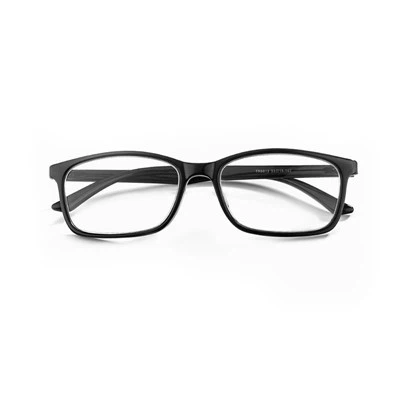
If you’re a retailer looking to stock plastic sunglasses, or a customer who wants to learn more about the right type for your lifestyle, feel free to reach out. We’re happy to answer any questions, send samples, or help you pick the perfect line for your needs. No sales pitches, no fine print, just straight answers about how our sunglasses perform, from someone who’s been in the industry for years.
Plastic Frames References:
- International Organization for Standardization (ISO) 14577:2015, Metallic materials – Instrumented indentation test for hardness and materials parameters
- ASTM F735-18, Standard Test Method for Measuring Scratch Resistance of Transparent Plastics and Coatings
- Sunglass Industry Council Annual Material Durability Report, 2022
- Mohs Hardness Scale: A Guide for Common Materials, US Geological Survey, 2021
- Polycarbonate vs. Acetate Lens Performance, Vision Council of America, 2020
Danyang Boyue Optical Glasses Co., Ltd.
As one of the leading plastic sunglasses manufacturers and suppliers in China, we warmly welcome you to buy bulk cheap plastic sunglasses for sale here from our factory. All customized products are with high quality and competitive price. Contact us for pricelist and free sample.
Address: Boyue Optical Glasses, No. 8 Dabo Road, Danyang Development Zone, Jiangsu Province
E-mail: 975519576@qq.com
WebSite: https://www.cnboyue.com/
