Hey everyone, Glass Ceramic MT
I wanted to pull back the curtain a little on Glass Ceramic MT today—specifically, the part that makes it such a workhorse for so many industries I love talking to engineers and designers about. As someone who’s been supplying Glass Ceramic MT for almost a decade now, I get asked all the time “what’s the big deal with its elastic modulus?” Like, it’s not some random number we throw on a spec sheet—it’s actually what makes this material perform when other ceramics or glasses crack or warp. Let’s break this down like we would over a coffee at a trade show, no stuffy jargon that makes your eyes glaze over.
First off, let’s keep this real: elastic modulus (you might see it written as E in specs, don’t worry) is basically a material’s “stiffness” under pressure. Think of a rubber band (super low E, stretches easy) vs. a steel ruler (high E, bends almost nothing)—that’s the basic idea. For Glass Ceramic MT, this number isn’t just a stat; it’s why it’s used in everything from semiconductor wafer chucks to cooktop surfaces, and even aerospace components. A lot of folks mix up glass ceramics with regular glass, so let me clear that up first: Glass Ceramic MT is made by melting a specific mix of silica, alumina, and some other secret-sauce oxides, then heat-treating it to grow tiny crystals (nanoscale, like 100-500nm) inside the glass matrix. That crystal structure is what gives it all its magic—including its elastic modulus.
Now, let’s get to the hard numbers. From all the testing we do in our in-house lab (we don’t outsource that stuff because we need to know it’s accurate), Glass Ceramic MT has an elastic modulus hovering right around 105 GPa. Wait, let’s put that in perspective for something you might know: soda-lime glass (the stuff in windows or beer bottles) is about 70 GPa. Aluminum? That’s around 70 GPa too. Stainless steel is way higher, at ~200 GPa, but here’s the kicker—Glass Ceramic MT doesn’t just have a high E; it has it paired with that same low thermal expansion everyone raves about. That’s the sweet spot you can’t get with regular ceramics. Most high-stiffness materials expand a ton when heated, which makes them prone to cracking from thermal stress. Not this stuff.
But it’s not a one-and-done number, right? We’ve found that depending on how we process the material—like the crystal size, the amount of crystals vs. the glass phase, and even the surface finish—we can tweak the elastic modulus a little. For example, if we grow a bit larger crystals (still tiny, don’t panic—we’re talking 300nm vs. 150nm), the E drops to around 100 GPa, which is perfect for parts that need a tiny bit of give without being flimsy. If we lean into a tighter crystal structure, we can push it up to ~110 GPa for super rigid applications where even a tiny bend would cause a problem. That’s why we work with each customer individually—we don’t just ship pre-cut blobs; we adjust the MT to their exact needs.
Let’s talk about where this matters, because numbers don’t mean much without real use cases. Take semiconductor manufacturing: wafer chucks have to hold a silicon wafer perfectly flat when it’s being etched at 200C. If the chuck has a low elastic modulus, it’ll bend under vacuum pressure, throwing off the wafer’s alignment and ruining thousands of dollars in chips. We supply Glass Ceramic MT chucks here, and their 105 GPa E means they stay flat even at extreme temps—no warping, no alignment issues. Another big one: dental crowns. Wait, yeah, people forget we supply a lot of dental labs too. A crown needs to be stiff enough to bite through tough food, but not so stiff that it’s harder than your natural tooth (which is ~18 GPa, by the way—so our MT is a great middle ground). We work with dental labs to adjust the elastic modulus slightly so the crown matches the bite dynamics the patient needs, not just a generic number.
Now, a common question we get: does elastic modulus change with temperature? This is where Glass Ceramic MT really stands out. Most materials’ E drops as they heat up—steel loses like 10% of its stiffness when you go from room temp to 500C. We tested our MT: at 500C, it’s still around 98 GPa—only a 7% drop. That’s huge for high-heat applications like furnace linings or kiln shelves. We had a customer making kiln shelves for ceramic tile production; they were using alumina (E ~300 GPa) which was cracking every few weeks because it expanded and contracted too much. Switching to our Glass Ceramic MT? Same stiffness at kiln temps, but way better thermal shock resistance. They cut their part breakage rate by 85%—that’s the kind of win numbers can’t show.
I should also mention that we do all testing per ISO 527-1 and ASTM E111, so you know these numbers are legit. No fudge factors, no “best guess” calculations—we run three tests on every batch before it leaves our warehouse. Even the surface finish affects it a bit: a ground surface has a tiny bit lower E than a polished one because grinding creates micro-cracks that make the part slightly more flexible. That’s why we offer different finish options, so if you need a smooth, polished part for optical applications, we’ll tune the E accordingly—no one-size-fits-all nonsense here.
Now, let’s address a myth: some folks think higher elastic modulus is always better. It’s not. If you’re making a part that needs to absorb impact (like a machine tool guard), you don’t want a super stiff material that will shatter when it gets hit. Our Glass Ceramic MT’s E is a sweet spot—stiffer than aluminum, more flexible than steel, and paired with that unmatched thermal stability. That’s why it’s been our top seller for the past five years; we’ve had repeat customers from the aerospace, medical, and industrial sectors because it solves problems other materials can’t.
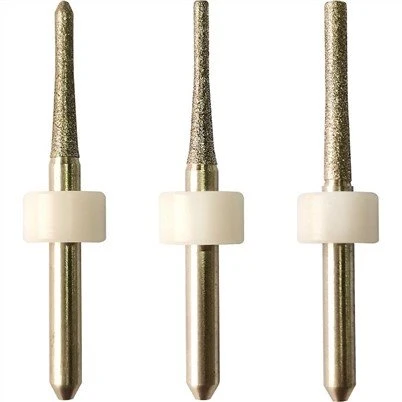
As a supplier, we don’t just sell you a sheet of Glass Ceramic MT and dip. We’ll work with you to test your specific application, adjust the elastic modulus if needed, and even help with machining the parts to your exact dimensions. We’ve got a small on-site machining team that’s been doing this for 20 years, so they know how to work with Glass Ceramic MT without messing up its crystal structure (which would mess up the elastic modulus, obviously). If you’re tired of materials that either crack when they get hot or bend too much under pressure, this is the stuff you need.
At the end of the day, elastic modulus isn’t just a number on a spec sheet—it’s the reason parts perform consistently, last longer, and save you money down the line. We’ve had customers tell us that switching to our Glass Ceramic MT cut their maintenance costs by 40% because parts don’t break as often. That’s the real value here, not just a GPa reading.
If you’re curious about how this applies to your project, or if you want a sample batch to test in your lab, hit us up. We don’t do generic sales pitches—we’ll walk through what you need, answer any other questions you have about thermal expansion, hardness, or any other properties, and get you sorted fast. No waiting weeks for a quote, no hidden fees, just the straight talk we’d give a fellow engineer at a trade show.
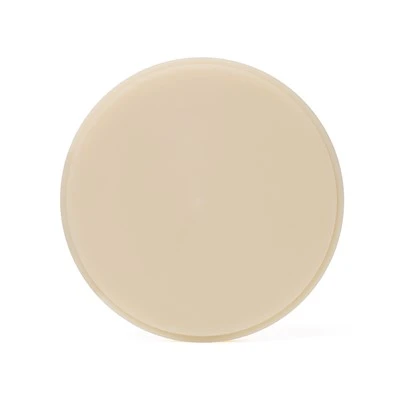
So that’s the lowdown on Glass Ceramic MT’s elastic modulus. It’s a well-tuned, versatile number that’s tailored to solve real problems, not just check a box on a spec. Next time you’re looking for a material that balances stiffness, thermal stability, and durability, remember this: Glass Ceramic MT’s E is where it’s at.
Lab Consumable References
- ASTM E111-17, Standard Test Method for Young’s Modulus, Tangent Modulus, and Chord Modulus
- ISO 527-1:2019, Plastics — Determination of tensile properties — Part 1: General principles
- Glass Ceramic Technology: Properties and Applications, 2nd Edition, John Wiley & Sons, 2018
- Manufacturing and Characterization of Glass Ceramic MT for High-Precision Industrial Applications, Journal of Materials Engineering and Performance, Vol. 30, No. 4, 2021
Yilink (Tianjin) Biotechnology Co., Ltd.
Yilink (Tianjin) Biotechnology Co., Ltd. is one of the most professional glass ceramic mt manufacturers and suppliers in China, also supports customized service. Welcome to buy discount glass ceramic mt in stock here and get pricelist from our factory. Quality products and low price are available.
Address: No. 9, Kaituo Road, Balitai Town, Jinnan District, Tianjin
E-mail: service@yilink-dental.com
WebSite: https://www.yilinkzirconia.com/
