If you’ve ever worked with industrial wastewater treatment, biodiesel production, or food processing that requires separating three distinct phases—solid, oil, and water—you know how critical a 3 Phase Decanter Centrifuge is to keeping operations running smoothly. As a supplier of these units, I spend most of my days talking to plant managers, maintenance leads, and operators who’ve dealt with the quiet, sneaky hazards these machines bring when not treated with the respect they deserve. I’ll be honest: when I first started in this industry, I thought the biggest risk was a spill or a broken part. Over 12 years on the job, I’ve learned that the hazards are more insidious—they creep up on you through skipped maintenance, misconfigured settings, or just not paying attention to the small, easy-to-miss signs that something’s wrong. 3 Phase Decanter Centrifuge
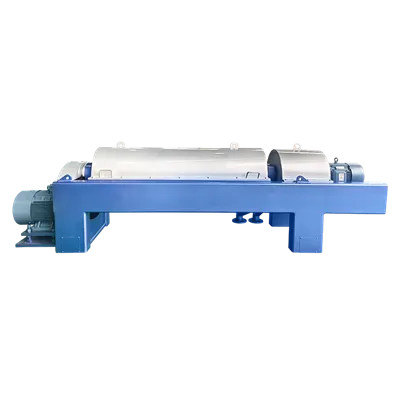
Let’s start with the most immediate hazard anyone working around these machines faces: high-speed rotating parts. A 3 Phase Decanter Centrifuge spins at speeds between 2,000 and 5,000 RPM, depending on the model and material being processed. That’s faster than most car engines when they’re cruising on the highway. The rotating assembly includes a horizontal screw conveyor, a bowl, and a gearbox that keeps the two moving at slightly different speeds. If even a small, unbalanced part gets into that bowl—like a piece of solid waste that wasn’t filtered out, or a loose bolt from a previous inspection—the unbalance creates a vibration that amplifies like a tuning fork. I once got a call from a meat processing plant operator last year who thought his centrifuge was “just rattling a little” on his shift. By the time maintenance got there, the unbalance had sheared a 1-pound counterweight from the bowl, sending it flying through the 1/4-inch thick steel casing like it was a tin can. It embedded itself in a wall 15 feet away. That operator was lucky; he was at the control panel across the room, not leaning over the unit when it happened. Another common mistake here is bypassing safety interlocks. These interlocks are designed to shut the machine down instantly if the casing is open or if the rotating parts move outside their designated path. I’ve seen operators prop interlocks open to clean the inside of the bowl mid-cycle, saying it’s “faster than waiting for the machine to power down.” That’s a recipe for disaster. Even a split second of contact with a 3,000 RPM screw conveyor can sever limbs or cause fatal blunt force trauma—there’s no time to react when that machine is spinning.
Next up, and something I don’t see talked about enough, is process fluid-related hazards. The whole point of a 3 Phase Decanter is to separate three phases, which means the machine is handling a lot of different liquids: wastewater, oil, chemicals from biodiesel production, even food-grade fats from rendering plants. Many of these fluids are not just messy—they’re toxic, flammable, or corrosive. Take biodiesel production, for example. The raw feedstock for 3 Phase Decanters here often contains methanol, hexane, and residual catalysts like sodium hydroxide. These are volatile organic compounds (VOCs) that can build up in the enclosed centrifuge casing as the machine cycles. If the ventilation system that draws vapors out of the unit is clogged or broken, the vapors can reach their lower explosive limit (LEL) in minutes. A 2022 study from the National Institute for Occupational Safety and Health (NIOSH) documented three incidents where centrifuge vapors ignited because operators had disconnected ventilation to clear a solids backup. The explosion not only damaged the machine but also blew open adjacent pipework, releasing more flammable fluid. Then there’s corrosion. If you’re processing saltwater, acidic food processing waste, or mining slurry, the centrifuge bowl and screw conveyor—usually made of stainless steel—can degrade over time from exposure to these corrosive fluids. Pitting corrosion creates tiny cracks in the metal that eventually turn into holes, letting process fluid leak out directly onto the rotating parts. Over time, that corrosion weakens the structural integrity of the bowl, which is under immense centrifugal force (we’re talking 2,000 times the force of gravity inside the bowl). A corrosion-related bowl failure isn’t sudden—it starts with tiny leaks, weird vibrations, and off-spec separation, but most operators miss those early signs because they’re focused on production, not asset health. I had a mining client last year who went three months ignoring a small fluid leak from his centrifuge; the bowl split in half mid-cycle, sending 500 gallons of acidic slurry across the plant floor and shutting down their entire leach pad operation for 10 days. The replacement parts cost $80,000, but the downtime cost them over $2 million in lost production.
Wait, let’s not forget about ergonomic and overexertion hazards that come from maintaining these machines. A 3 Phase Decanter Centrifuge is a heavy beast—most industrial models weigh between 5,000 and 20,000 pounds, and they’re usually installed on concrete foundations in tight spaces, like the back of a wastewater treatment building or a food processing line. When you need to perform routine maintenance—changing oil in the gearbox, cleaning the screw conveyor, or inspecting the seal—you have to climb over the machine, lift heavy components, or work in awkward positions that strain your back, neck, or shoulders. I’ve had more than one service tech come to me with a hernia because they tried to lift a 30-pound seal assembly alone, or a maintenance supervisor who developed chronic knee pain from kneeling on concrete every week to access the centrifuge’s lower drain ports. Even more common is slip and fall risk. Process fluids leak from seals, spill during maintenance, and even accumulate on the floor around the centrifuge. I was on a site visit last year at a rendering plant where an operator slipped on a pool of animal fat that had leaked from a centrifuge and hit his head on a concrete block, requiring stitches and three days off work. Most plants don’t have dedicated non-slip flooring around centrifuge units, and operators often skip wearing proper footwear because it’s “too hot” or “too bulky” for their shift.
Then there’s the less talked-about hazard of exposure to fine particulates and hazardous air pollutants (HAPs). When a decanter centrifuge separates solid matter from liquid, those solids are often very fine—like sewage sludge particles, metal shavings from mining, or residual protein from food processing. When the screw conveyor ejects the solids from the bowl, they’re usually warm and can become airborne as dust or fine mist, especially if the machine is running at high speed. In wastewater treatment plants, these solids often contain pathogens like E. coli, salmonella, or even hepatitis viruses, as well as heavy metals like lead and cadmium. If the centrifuge’s dust collection system or enclosure is not properly sealed, these particulates get into the air the operators breathe. A 2021 study from the American Conference of Governmental Industrial Hygienists (ACGIH) found that wastewater treatment workers who operate decanter centrifuges have a 30% higher rate of respiratory illnesses, including chronic bronchitis, than the general workforce, due to repeated exposure to these pathogens and heavy metals. In oil and gas applications, the solids can contain silica dust, which is a known carcinogen that causes silicosis, a incurable lung disease. I’ve seen operators wear simple cloth masks when they should be using N95 respirators, because the plant didn’t provide proper PPE or train them on the difference between a dust mask and a respiratory protective device.
Let’s circle back to something that’s become way more common with the rise of Industry 4.0: cyber hazards. Wait, you might be thinking, a centrifuge is a big hunk of metal—how could it be a cybersecurity risk? But modern 3 Phase Decanter Centrifuges are controlled by PLCs (programmable logic controllers) connected to the plant’s network, with remote monitoring capabilities to adjust speed, flow rate, and separation quality. If a hacker gains access to that network, they can manipulate the centrifuge’s settings to cause catastrophic failure. Last year, there was an incident at a chemical plant where a rival company hacked into their network and increased the centrifuge’s speed by 20%—not enough to trip the safety interlock, but enough to cause the bowl to develop a small crack from excess centrifugal force. The plant didn’t notice until weeks later, when the crack grew and the machine had to be shut down for emergency repairs, costing $500,000 in downtime. Even accidental, non-malicious cyber hazards are a problem: if an operator accidentally connects a personal device to the plant network while troubleshooting, they could introduce malware that corrupts the PLC’s settings, leading to unbalanced operations or a shutdown. As a supplier, we build our units with basic cybersecurity protections, but many older models still run on unencrypted networks that are vulnerable.
Now, I’m not here to scare anyone away from using 3 Phase Decanter Centrifuges—far from it. These machines are the backbone of so many essential industries, from cleaning our water to producing the fuel and food we rely on. But understanding the potential hazards is the first step to mitigating them. Over the years, I’ve worked with clients to develop simple, practical safety protocols that cut down on incidents by 90%: things like locking out/tagging out (LOTO) the centrifuge before any maintenance, installing secondary ventilation systems for enclosed units, regular ultrasonic testing for corrosion on bowl components, and mandatory annual cybersecurity audits for connected units. We also provide operator training that goes beyond the basic how-to of starting the machine—we teach them to spot the early warning signs: a slight increase in vibration, a change in separation clarity, an unusual odor from the vent, or a small drip from the casing, so they can address issues before they become hazards.
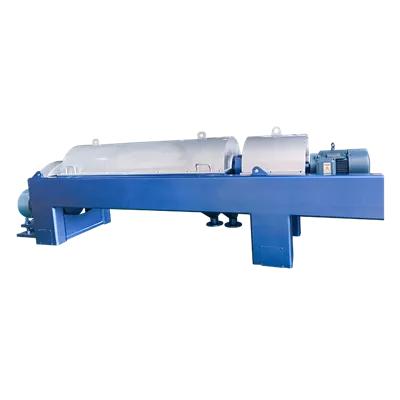
If you’re operating a 3 Phase Decanter Centrifuge, or considering adding one to your facility, don’t wait for an incident to review your safety protocols. Our team has helped hundreds of clients across industries customize safety features to match their specific processes, from explosion-proof models for biodiesel plants to non-slip access platforms and enclosed solids ejection systems for food processing. We offer on-site safety audits to identify hidden risks in your current setup, no obligation, and work with your maintenance team to build a preventive maintenance schedule that keeps your operators safe and your machine running at peak performance. Don’t let a preventable hazard turn a productive operation into a costly incident—reach out to our team today to learn how we can support your safety and production goals.
2 Phase Decanter Centrifuge References:
National Institute for Occupational Safety and Health (NIOSH). 2022. Centrifuge Incident Investigations: High-Speed Rotating Component Failures and Vapor Ignition. Washington, DC: U.S. Department of Health and Human Services.
American Conference of Governmental Industrial Hygienists (ACGIH). 2021. Occupational Exposures to Process Particulates in Decanter Centrifuge Operations. Cincinnati, OH: ACGIH Publications.
Occupational Safety and Health Administration (OSHA). 2020. Lockout/Tagout Standard for Rotating Industrial Equipment. Washington, DC: U.S. Department of Labor.
Lishui Yuanrong Environmental Protection Equipment Co., Ltd.
As one of the most professional 3 phase decanter centrifuge manufacturers and suppliers in China, we have world-leading production equipment and strong manufacturing capabilities. Please feel free to buy customized 3 phase decanter centrifuge from our factory. Also, quotation is available.
Address: Lot 6-1, Block 15, Wanyang Zongchuang City, Lishui, Zhejiang, China
E-mail: 361184920@qq.com
WebSite: https://www.yrhdc.com/
