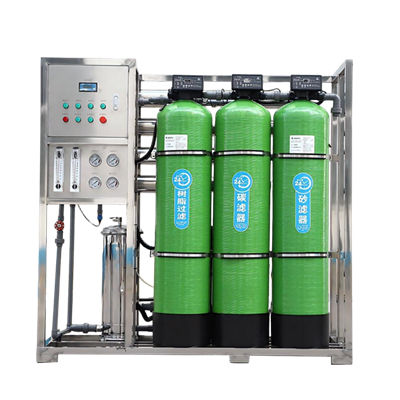
Reverse osmosis (RO) water purification equipment has become a cornerstone in the quest for clean and safe drinking water. As a supplier of water purification equipment, I’ve witnessed firsthand the transformative power of this technology. In this blog, I’ll delve into the inner workings of reverse osmosis water purification equipment, exploring its components, the purification process, and its benefits. Water Purification Equipment
The Basics of Reverse Osmosis
Reverse osmosis is a water purification process that uses a semi – permeable membrane to remove contaminants from water. But to understand how it works, we first need to grasp the concept of osmosis. Osmosis is a natural phenomenon where water molecules move from an area of lower solute concentration to an area of higher solute concentration through a semi – permeable membrane, in an attempt to equalize the solute concentrations on both sides.
In reverse osmosis, we reverse this natural process. By applying pressure to the side of the membrane with a higher solute concentration, we force water molecules to move from the more concentrated solution through the semi – permeable membrane to the less concentrated side, leaving behind many of the dissolved contaminants.
Components of Reverse Osmosis Water Purification Equipment
1. Pre – filters
Pre – filters are the first line of defense in a reverse osmosis system. They are designed to remove large particles and debris from the water before it reaches the semi – permeable membrane. There are typically two types of pre – filters used: sediment filters and carbon filters.
Sediment filters are made of materials like polypropylene and are responsible for capturing particles such as sand, rust, and silt. These large particles can damage the RO membrane if not removed in advance. Carbon filters, on the other hand, are used to remove chlorine, volatile organic compounds (VOCs), and some bad odors and tastes from the water. Chlorine is particularly harmful to RO membranes as it can break down the membrane material over time.
2. The Reverse Osmosis Membrane
The heart of the reverse osmosis system is the semi – permeable membrane. This membrane is made of thin – film composite (TFC) materials, which are highly effective at separating water molecules from dissolved salts, heavy metals, microorganisms, and other contaminants. The pores in the RO membrane are extremely small, typically around 0.0001 micrometers in size. This is small enough to block most ions, such as sodium, calcium, and chloride, as well as larger molecules like bacteria and viruses.
3. Pressure Pump
Since reverse osmosis works against the natural osmotic pressure, a pressure pump is required to provide the necessary force to push water through the membrane. The pressure needed for effective reverse osmosis can vary depending on the water source and the type of contaminants present. In general, municipal water supplies usually require a pressure of around 40 – 80 psi (pounds per square inch), while well water systems may need higher pressures. The pressure pump ensures a continuous flow of water through the membrane, allowing for efficient purification.
4. Post – filters
After the water has passed through the RO membrane, it goes through post – filters. These filters further polish the water by removing any remaining taste or odor. A common type of post – filter is a granular activated carbon (GAC) filter, which can adsorb any residual contaminants that may have passed through the membrane or developed during the storage of the purified water.
5. Storage Tank
A storage tank is used to store the purified water produced by the RO system. The tank allows for a ready supply of clean water, so you don’t have to wait for the system to purify water every time you need it. The tank is usually made of durable materials like stainless steel or food – grade plastic and is often equipped with a float valve that shuts off the system when the tank is full.
The Reverse Osmosis Purification Process
1. Inlet and Pre – treatment
The process begins when water from the source, whether it’s a municipal supply or a well, enters the RO system. The water first passes through the pre – filters. The sediment filter traps large particles, while the carbon filter removes chlorine and organic compounds. This pre – treatment helps to protect the RO membrane from damage and fouling, ensuring its long – term performance.
2. Pressurization and Membrane Filtration
Once the water has been pre – treated, it enters the pressure pump. The pump increases the pressure of the water and forces it against the RO membrane. As the water is pushed through the membrane, water molecules pass through, while contaminants such as dissolved salts, minerals, heavy metals, and microorganisms are left behind. The purified water, known as the permeate, collects on the other side of the membrane, while the concentrated stream of contaminants, called the reject or brine, is flushed away.
3. Storage and Post – treatment
The permeate then flows into the storage tank for later use. Before the water is dispensed, it passes through the post – filter, which improves the taste and odor of the water. When you turn on the faucet connected to the RO system, the purified water is delivered to you, ready for drinking, cooking, or other uses.
Benefits of Reverse Osmosis Water Purification Equipment
1. High – Quality Water
One of the most significant benefits of RO water purification is the high quality of the water it produces. By removing a wide range of contaminants, including heavy metals like lead and mercury, microorganisms like bacteria and viruses, and dissolved salts, RO systems can provide water that is clean, safe, and tastes great.
2. Versatility
Reverse osmosis systems can be used in various settings, from residential homes to commercial and industrial facilities. In homes, they can be installed under the sink for point – of – use purification or as a whole – house system. In commercial settings, RO systems are used in restaurants, hotels, and hospitals to ensure the quality of water used in cooking, cleaning, and medical procedures.
3. Cost – effectiveness
While the initial investment in an RO system may be higher compared to some other water purification methods, it can be cost – effective in the long run. By providing a reliable source of clean water, RO systems can reduce the need to purchase bottled water, which can be expensive over time. Additionally, the maintenance requirements of RO systems are relatively straightforward, with periodic filter changes being the main expense.
Contact Us for Your Water Purification Needs

If you’re in the market for a high – quality reverse osmosis water purification system, look no further. As a leading supplier of water purification equipment, we offer a wide range of RO systems to meet your specific needs. Whether you’re a homeowner looking to improve the quality of your drinking water or a business owner in need of a commercial – grade system, we have the solutions you’re looking for.
Packaged Sewage Treatment Plant Our team of experts is available to provide you with more information, answer your questions, and help you find the perfect water purification system for your situation. We understand that every customer is unique, and we’re committed to providing personalized service and support. Don’t compromise on the quality of your water. Contact us today to start the conversation about a cleaner, safer water supply.
References
- Crittenden, John C., et al. Water Treatment: Principles and Design. John Wiley & Sons, 2012.
- AWWA Reverse Osmosis Membrane Technology Committee. Reverse Osmosis Technology and Applications. American Water Works Association, 2005.
- Pasqua, Francesco. "Reverse Osmosis for Water Desalination: A Comprehensive Review.” International Journal of Environmental Research and Public Health, vol. 16, no. 10, 2019.
Shandong Lingke Environmental Technology Co., Ltd.
We’re well-known as one of the leading water purification equipment manufacturers and suppliers in China, featured by quality products and good price. Please rest assured to buy durable water purification equipment for sale here from our factory. Customized orders are welcome.
Address: 100 Meters South of the Intersection of County Road 042 and National Highway 309, Changle County, Weifang City, Shandong Province
E-mail: aileenlin@sdlingkegroup.com
WebSite: https://www.lkecotech.com/
