What is the airfoil design of an axial fan blade? Axial Fan

Hey there! I’m a supplier of axial fans, and today I wanna talk about the airfoil design of axial fan blades. It might sound a bit technical, but trust me, it’s super important in making our fans work their best.
Let’s start with the basics. An airfoil is the shape of the cross – section of a fan blade. Just like an airplane wing, the airfoil of an axial fan blade is designed to generate lift, but in our case, the lift is used to move air. When air flows around the airfoil, it creates a pressure difference. The air on one side of the blade moves faster, resulting in lower pressure, while the air on the other side moves slower, causing higher pressure. This pressure difference is what drives the air forward, creating the airflow that we need.
There are different types of airfoil designs for axial fan blades. One common type is the NACA airfoil. NACA stands for the National Advisory Committee for Aeronautics, and they came up with a whole series of airfoil shapes. These airfoils are well – studied and have some really cool properties. For example, they can provide a good balance between lift and drag. A good airfoil design should maximize lift, which means more air can be moved, while minimizing drag, because drag is like a resistance that slows the blade down and wastes energy.
Now, when we’re designing axial fan blades, we can’t just pick any airfoil off the shelf. We have to consider a bunch of factors. First off, the operating conditions of the fan are crucial. If the fan is gonna be used in a high – flow application, like in a large ventilation system for a warehouse, we need an airfoil that can handle a lot of air volume. In this case, an airfoil with a relatively large chord length (that’s the distance from the leading edge to the trailing edge of the blade) and a gentle curvature might be a good choice.
On the other hand, if the fan is for a low – noise application, like in a home appliance or a quiet office environment, the airfoil design will be different. We’ll want an airfoil that can move air efficiently without creating too much noise. Sometimes this means using an airfoil with a thinner profile and a more streamlined shape. Noise is often caused by turbulent airflow around the blade, and a well – designed airfoil can help reduce this turbulence.
Another factor we consider is the rotational speed of the fan. Fans can spin at different speeds, and the airfoil needs to be optimized for the specific speed range. At high speeds, the airfoil has to be able to withstand the forces generated by the fast – moving air. It also needs to maintain its aerodynamic efficiency. If the rotational speed is too high for the airfoil design, it might start to stall. Stalling is when the air can’t flow smoothly over the blade anymore, and it leads to a sharp drop in performance and an increase in noise.
The number of blades on the axial fan also affects the choice of airfoil design. If we have more blades, each blade can have a smaller chord length and a different shape. More blades can increase the total lift generated, but they also increase the drag and the complexity of the airflow. So, we have to find the right balance between the number of blades and the airfoil design to get the best performance.
We also take into account the material of the blade. Different materials have different properties, such as weight, strength, and durability. For example, if we’re using a lightweight plastic for the blade, we can design an airfoil that takes advantage of the material’s flexibility. But if we’re using a more rigid metal, the airfoil design might be adjusted to handle the stiffness of the material and ensure that it doesn’t deform under the forces of the air.
In our company, we use a combination of computational fluid dynamics (CFD) and real – world testing to optimize the airfoil design of our axial fan blades. CFD is like a virtual wind tunnel on a computer. It allows us to simulate how the air will flow around different airfoil shapes and make adjustments to the design before we actually build the blades. This saves a lot of time and money, but it’s not enough on its own.
We still do a lot of real – world testing. We put our prototype blades in a test rig and measure things like airflow rate, pressure, and noise level. We play around with different airfoil designs, changing the shape, the angle of attack (that’s the angle between the blade and the oncoming air), and other parameters to see what works best. It’s a bit like a science experiment, but it’s all about making the best possible axial fans for our customers.
So, to sum it up, the airfoil design of an axial fan blade is a complex but really important part of making a high – performance fan. It involves considering factors like operating conditions, rotational speed, number of blades, and blade material. By using advanced design techniques and a lot of testing, we can create airfoils that move air efficiently, quietly, and reliably.
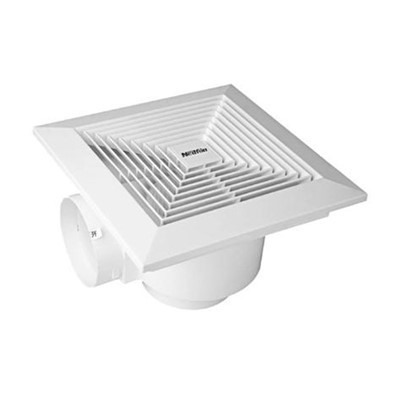
If you’re in the market for axial fans, whether it’s for industrial ventilation, HVAC systems, or any other application, we’ve got you covered. Our team of experts has spent years perfecting the airfoil design of our fan blades to ensure top – notch performance. Don’t hesitate to get in touch with us to discuss your specific needs. We’d love to work with you to find the best axial fan solution for your project.
Axial Fan References:
- Moran, M. J., & Shapiro, H. N. (2000). Fundamentals of Engineering Thermodynamics. John Wiley & Sons.
- Munson, B. R., Young, D. F., & Okiishi, T. H. (2006). Fundamentals of Fluid Mechanics. John Wiley & Sons.
Anhui Zhongxin Sanyuan Ventilation Equipment Co., Ltd.
We are one of the most professional axial fan manufacturers and suppliers in China, featured by quality products and good price. Please rest assured to buy customized axial fan made in China here from our factory. Also, pricelist is available.
Address: No. 1 Yuanxing Road, North District of Guangde Economic Development Zone, Guangde City, Xuancheng City, Anhui Province, China
E-mail: newsanyan@gmail.com
WebSite: https://www.newsanyan.com/
