If you’ve ever stepped into a metal fabrication shop, you’ve probably seen that single head aluminium cutter parked near the drill presses, band saws, and tube notching stations. At my company—we build and service these cutters, so I get asked the same question all the time: Can a single head aluminium cutter actually cut aluminium tubes? It’s a fair question, too. On the surface, a single head cutter looks like a big, simple blade with a vice to hold your workpiece, and if you’ve ever used a wood saw for a flimsy metal tube, you might be skeptical. But the short answer is yes—though not all single head aluminium cutters are built the same, and there are key factors that separate the ones that do a good job from the ones that leave you with burrs, bent tubes, or wasted material. Single Head Aluminium Cutter
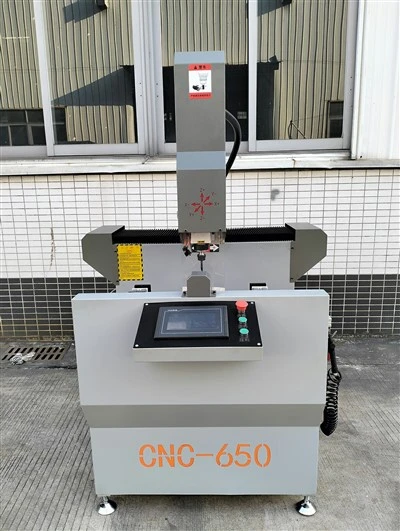
Let’s start with what a single head aluminium cutter is, because that’s the foundation here. Unlike double head cutters which are built for cutting identical pieces from both ends, or band saws which can cut longer, more irregular stock, a single head cutter is a compact, stationary machine designed for precision cuts on aluminum, plastic, and soft metals. It’s got one cutting head, a heavy-duty vise that clamps the workpiece firmly in place, and a circular blade made specifically for metal. For aluminum tubes, in particular, this set-up works well because it’s fast, accurate, and easy to set up for small to medium batch jobs—think window frame parts, solar panel frames, or custom furniture components, where you might need 10 to 100 identical tubes cut to length.
Now, why do people doubt this works? A lot of the confusion comes from bad experiences with low-cost, entry-level cutters that aren’t tuned for tubes. If you buy a cheap single head cutter with a dull blade, a flimsy vise that doesn’t hold the tube tight, or a motor that doesn’t have enough torque, you’re going to get bad results. I’ve seen guys try to use a general-purpose steel cutting blade on aluminum tubes and end up with a cut that’s rough, has jagged edges, and even bends the tube wall because the blade is dragging instead of slicing through. But when you spec a single head aluminium cutter correctly for tube cutting, that problem goes away.
Let’s break down the critical components that make a single head cutter suitable for aluminium tubes. First, the blade. This is non-negotiable. For aluminum, you need a carbide-tipped blade with fine teeth—usually 80 to 120 teeth per inch (TPI), depending on the tube wall thickness. Thin-walled tubing, like the 1mm walls used for window frames, needs a higher TPI blade to prevent the material from deforming as it’s cut. Thicker-walled structural tubing might use a slightly lower TPI, but still fine enough to leave a clean edge. I always tell customers: if your cutter came with a default blade designed for cutting aluminum extrusion, don’t use that for tubes. Extrusion is a solid, flat piece, while a tube is a hollow, circular shape that can flex if not cut properly. A fine-tooth carbide blade is designed to bite evenly into the tube’s circumference without bending the wall.
Next, the vise and clamping system. This is the second big piece of the puzzle. When you cut a tube, the last thing you want is for it to shift mid-cut, because that will leave an angled cut, or even make the blade skip and damage the tube. Single head cutters built for tubing often have segmented vises—instead of a single flat jaw, the vise has V-shaped inserts that cradle the round tube, distributing pressure evenly around the circumference. Some higher-end models also have an adjustable stop, so you can set the exact length you want and load multiple tubes at once, cutting them all to the same measurement in seconds. If your single head cutter has a vise that only has flat jaws, you can still modify it with V-block inserts, but that’s an extra step that entry-level models skip. A bad vise leads to uneven clamping, which leads to bad cuts—simple as that.
Then there’s the motor and cutting mechanism. Aluminum is a soft metal, but that doesn’t mean you can use a low-power motor. For single head cutters, you want a motor with at least 2 to 3 horsepower, and variable speed control. Too slow, and the blade will burn through the aluminum, leaving a rough, heat-affected edge. Too fast, and the blade will chip or skip. Variable speed lets you adjust the RPM based on your tube’s wall thickness: thinner tubing runs a bit slower to prevent deformation, thicker runs a bit faster for clean cutting. I’ve had customers come to me saying their old cutter “doesn’t cut tubes well” only to realize they were running a 1.5 HP motor at full speed on 3mm wall tubing—an easy fix once they dial in the speed.
Now, what are the real-world results when you use a properly set up single head aluminium cutter for tubes? Let’s talk about a common use case: a small custom furniture shop that makes aluminum table frames. They might need 20 pieces of 50mm diameter tube, 60cm long, cut at a 45-degree angle for mitered joints. With a good single head cutter, they can load all 20 tubes into the vise, set the miter angle, and cut all 20 in less than two minutes. The cuts are accurate within 0.1mm, so when they go to weld or assemble the frames, the pieces fit perfectly with no gap. No burrs, no bent walls, no wasted material from bad cuts. That’s a huge win for small shops that don’t want to invest in a more expensive double head or CNC band saw.
But wait—there are limitations, and it’s important to be honest about those. A single head aluminium cutter isn’t the right choice for every tube cutting job. If you’re cutting tubes longer than 3 meters, for example, a single head cutter (which is usually around 1.5 meters in length) might not have the capacity to hold the entire tube securely, or you’ll need an outfeed support. For very high volume jobs—like 1,000+ tubes a day— a single head cutter might be slower than a double head or CNC machine, but for small to medium runs, it’s unbeatable for speed and cost. Also, if you need complex cuts like notches or holes in the side of a tube, a single head cutter won’t do that—you’d need a tube notcher or mill for that. But for straight, mitered, or angled cuts on the end of a tube? Single head aluminium cutter is perfect.
I’ve had a lot of customers test this for themselves, which is why I love talking to people in the shop. Last quarter, a customer from a solar panel manufacturing company reached out to me because their old band saw was leaving too much burr on the aluminum tubes they use for panel frames, requiring extra deburring steps that slowed down their line. They rented a single head aluminium cutter from us to test, and after two weeks, they bought three of our cutters. The burr-free cuts meant their team didn’t have to spend an hour a day deburring, and their yield went up by 12% because they wasted fewer tubes from bad cuts. That’s the kind of real-world result that makes it clear: when set up right, these cutters work great for tubes.
Another common question: do I need to deburr cuts from a single head aluminium cutter? Again, it depends on the blade and the set-up. A good fine-tooth carbide blade will leave very little burr, but for applications where every surface has to be smooth—like parts that go into electrical components—you might still want a light deburring step. For furniture frames or window parts, though, most customers skip deburring entirely. It’s all about matching the cutter to your application.
At the end of the day, the myth that single head aluminium cutters can’t cut aluminum tubes comes from outdated, low-quality equipment. A lot of budget machines sold on industrial marketplaces are built for aluminum extrusion, not tubing, and they don’t have the clamping, blade, or speed control to handle hollow, round stock. But when you invest in a single head cutter designed specifically for tube cutting, with the right blade, vise, and motor, it’s a reliable, cost-effective solution for a huge range of metal fabrication jobs.

If you’re tired of dealing with bent tubes, rough cuts, and wasted material from your current tube cutting process, I’d be happy to help you find the right single head aluminium cutter for your needs. Whether you’re a small custom shop or a mid-sized manufacturing operation, we can walk through your specific job requirements, suggest the right model and blade, and answer any questions you have about getting clean, accurate cuts on aluminum tubes. Don’t settle for equipment that doesn’t fit your work—reach out today to discuss how a properly spec’d single head aluminium cutter can improve your workflow and cut costs.
Cutting Machine References
ASM International. (2005). ASM Handbook: Volume 16: Machining. ASM International.
Kalpakjian, S., & Schmid, S. R. (2014). Manufacturing Processes for Engineering Materials (7th ed.). Pearson.
Todd, R. H., Allen, D. K., & Alting, L. (1994). Manufacturing Processes Reference Guide. Industrial Press Inc.
Kanghong Building Materials Technology Sdn. Bhd.
As one of the most professional single head aluminium cutter manufacturers and suppliers in China, we have world-leading production equipment and strong manufacturing capabilities. Please feel free to wholesale advanced single head aluminium cutter for sale here from our factory. Customized orders are welcome.
Address: No.601, Block 2, Xinlianchang Industrial Park, No.2 Taixing Second Road, Taiping South Industrial Zone, Dali Town, Nanhai District, Foshan City
E-mail: 631871392@qq.com
WebSite: https://www.kanghong-building.com/
