Hey everyone, thanks for hanging out on the landscape boulders page today. I’m Jake, and I’ve been running this small landscape boulder supply spot for over 12 years now— I’ve had everything from first-time homeowners grabbing a single rock for their flower bed to landscape crews ordering 50+ tons for a big commercial park project. One question I get asked nonstop, more than “do these hold up to freeze-thaw?” or “can I get a mix of colors?” is, “what sizes do landscape boulders even come in?” Landscape Boulders
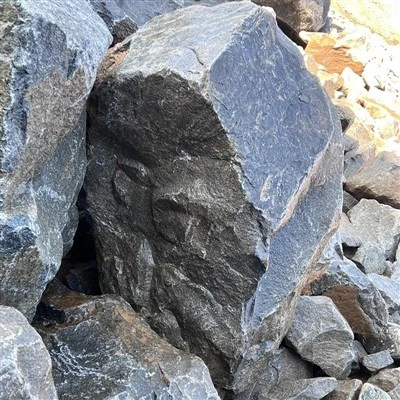
It’s such a fair question, right? A lot of new folks don’t realize these aren’t just the big honking rocks you see on mountain tops. They’re sorted, graded, and sized specifically for projects, so picking the wrong size can totally mess up a whole look. I’ve seen someone buy a bunch of tiny 6-inch boulders for a front yard that ended up looking like someone dumped a bag of marbles there, not a deliberate design. Today I’m breaking down every size we stock, what each one’s for, and the little tips I’ve picked up over the years so you don’t make that same mistake.
First off, let’s start with the smallest end of the spectrum— I call these “nugget boulders,” but most of the industry just tags them as small landscape boulders. Wait, hold up— quick side note: there’s a real difference between landscape boulders and decorative rock or pea gravel, okay? Boulders are solid, single pieces of rock, not crushed or split into smaller pieces. Nuggets clock in at 6 to 12 inches across, and they weigh like 10 to 50 pounds each. That’s basically the size of a big basketball to a full-sized laundry basket.
What are these tiny guys for? Mostly filler. Like, if you have a strip of mulch along your patio and you want to add a few visual breaks instead of all flat mulch, these are perfect. Or spacing between low native plants— say you’ve got a row of sage or lavender, dropping a few 8-inch nuggets in there stops the mulch from shifting around too much, plus it makes the bed look intentional, not messy. I also love them for accenting water features. If you have a small birdbath, setting a couple 10-inch boulders around the edge gives it a little weight without overwhelming the whole thing. One thing to watch with these? They’re too light to use as edging or to hold down anything, obviously— they’ll roll if you bump ‘em.
Next size up, and this is actually our most popular seller for residential projects: medium landscape boulders. These are 12 to 24 inches across, and they tip the scales at 50 to 250 pounds. That’s from a big recliner cushion (12 inches) to a full-sized office desk (24 inches) in terms of diameter. Why are these so popular? They’re versatile enough for almost any small to mid-sized residential space.
I sell a ton of these for front yard focal points. A single 18-inch boulder right in the center of a mulch bed, next to the walkway, pulls the whole look together way more than a dozen small rocks ever could. They’re also great for separating zones in a backyard— like, if you have a small patio area and then a raised veggie bed, a row of these medium boulders between them creates a clear boundary without being harsh like a metal fence. I also use them for retaining walls for tiny slopes— not for big, steep hills, obviously, but if you have a 1 to 2-foot drop in your yard, stacking two or three of these (staggered, so they don’t topple) works way better than a flimsy block wall. Pro tip here: if you’re placing medium boulders solo, always set them in at least 2 inches of dirt or gravel so they don’t shift when it rains or you mow nearby. I learned that the hard way— last year a customer put one 20-inch boulder right on top of mulch, and when a kid ran into it, it rolled across the yard and knocked over a patio table. Oops.
Now we get to the heavy hitters— large landscape boulders. These are 24 to 36 inches across, and they weigh a solid 250 to 500 pounds. That’s like a full-sized refrigerator to a small sofa for reference. These are for when you need something that makes a statement, or for projects that need real structural support.
Most of these go to two types of customers: people doing full backyard transformations, and commercial landscapers. For residential, a large boulder is usually the main focal point of the whole front or backyard. I had a customer last year with a sloped front yard— she didn’t want a boring block retaining wall, so we used four large boulders stacked in a staggered line to hold the slope, and that also became the center of her entire landscape design. She added native plants around them, and it looked way more natural than any man-made wall could. They’re also great for large water features— like if you’re building a pond or a stream in your yard, large boulders create the banks and look totally natural, not like a plastic liner holding water. The only downside to these? You can’t just pick ‘em up by hand. We use a small pickup with a lift gate or a mini skid steer to deliver these, and most homeowners don’t have the gear to move ‘em around once they’re dropped off. That’s why we offer free placement within 50 miles for any order over $500— takes the hassle out of it.
Okay, now the big boys— extra-large landscape boulders. Anything over 36 inches across, and weighing 500 pounds or more. Some of the ones we get from local quarries are even 6 feet across and 2,000+ pounds. These are not for the faint of heart, or for small spaces. I’d almost never sell these to a regular homeowner unless they have at least a half-acre yard and a clear plan for how to use them.
What are these for? Almost exclusively commercial projects or large-scale residential designs. Think: a city park entrance, where they place a massive boulder with the park’s name carved into it. Or a big corporate campus, using them to line a parking lot buffer zone. Or for extremely large natural-looking slopes that need serious retaining. I helped a customer a few years back with a 3-foot slope in their 2-acre backyard— they wanted a rustic, forest-like look, so we brought in three 4-foot boulders to hold the slope, plus dozens of medium and small ones to fill around it. It looked like it had been that way for decades, not installed a week prior. One thing to note about extra-large boulders: they come as single pieces, obviously, so the color and texture is totally unique. No two are exactly alike, which is why some people go crazy for them. The only catch? Delivery is a bit pricier, since you need a flatbed truck with a crane to drop them, but most people think it’s worth it for that one-of-a-kind look.
Wait a second, I should mention something important here— these sizes are all based on the longest diameter of the rock, right? Not the height, not the width, just the widest part. And weight is a rough estimate, because rock density varies a lot. We mostly get granite and fieldstone around here, so granite is denser, so a 24-inch granite boulder will weigh more than the same-sized fieldstone one. That’s why when I quote weight, I always add a “plus or minus 20%” note, so no one gets surprised on delivery day.
I also get a lot of questions about “specialty sizes” or custom cuts. Yeah, we can do custom stuff, but only if you have a specific project. Like, if you need a boulder that’s flat on one side to set against a wall, or a long, narrow one for a stream bed, we can have the quarry cut them. But custom cuts cost more, obviously, since it takes extra time and equipment. Most people don’t need that, though— the graded sizes I mentioned cover 95% of all projects, big or small.
Another thing I should clear up: don’t confuse these with construction boulders, which are way bigger, used for road foundations or dam work. We sell strictly landscape-grade boulders, meaning they have natural, rough textures and colors that look good in yards, not smooth, blasted rocks meant for structural work. I’ve had a contractor ask for construction boulders once for a backyard— I had to turn him down, because those don’t have the natural look homeowners want.
Let me run through a quick cheat sheet to make this easy for anyone planning a project:
- 6-12” (10-50 lbs): filler, small accent rocks, gaps between plants
- 12-24” (50-250 lbs): residential focal points, small zone boundaries, tiny slope retaining
- 24-36” (250-500 lbs): mid-sized focal points, water feature banks, slope retaining
- 36”+ (500+ lbs): large focal points, commercial projects, big slope work
I’ve been doing this long enough that I can usually look at a photo of someone’s yard or a sketch of their project and tell ‘em exactly what sizes they need. A common mistake people make is buying all the smallest rocks, or all the largest ones. You want a mix, usually— like, for a front yard, one medium or large boulder as the main focal point, then a handful of medium boulders around it, and some small nuggets to fill in the gaps between plants. That creates depth and makes the whole design look intentional, not like you just dumped a pile of rocks.
If you’re working on a small project, don’t overdo it. I had a first-time homeowner order 20 medium boulders for a 10×10 foot flower bed last year, and it looked way too cluttered. We ended up taking half of them back and giving her a discount, and she redid it with two large ones and four medium ones, and it turned out amazing. It’s easy to get carried away, I get it— they look so cool, you want to fill every space. But less is almost always more with boulders.
Also, pay attention to your yard’s size. If you have a small city yard under 1,000 square feet, extra-large boulders will dwarf the space and make it look smaller, not more impressive. Stick to small and medium. If you have a 1+ acre property, you can go big with extra-large boulders to make the whole space feel cohesive, like it’s a natural, wild landscape instead of a cookie-cutter suburban yard.

At the end of the day, landscape boulders are super versatile, but their size is the most important part of getting them right. I’m always here to help people figure out what they need, no matter how big or small their project is. If you’re planning a landscaping job and want to bounce ideas off someone who’s actually been doing this for over a decade, hit me up— I can send over photos of recent jobs we’ve done, give you a custom quote, or even help you plan the layout if you need it.
Landscape Boulders References:
- Landscape Industry Association. (2022). Standard Grading Specifications for Natural Stone and Boulders. LIA Publishing.
- US Geological Survey. (2019). Physical Properties of Common Landscape Rocks and Boulders. USGS Water Resources Research Center.
- Smith, K. (2021). Residential Landscape Design: Using Natural Boulders to Create Balance and Structure. Home and Garden Institute Press.
- National Association of Landscape Professionals. (2023). Best Practices for Sourcing and Installing Natural Landscape Boulders. NALP Education Foundation.
Xinglong Landscape Greening Co., Ltd.
We are one of the most professional landscape boulders manufacturers and suppliers in China, also support customized service. We warmly welcome you to wholesale bulk high quality landscape boulders in stock here from our factory. If you have any enquiry about pricelist, please feel free to email us.
Address: Xiaoluli Natural Village, Wutongshan Village, Meishan Town, Changxing County, Huzhou City, Zhejiang Province
E-mail: 18667092034@163.com
WebSite: https://www.xinglonggreen.com/
