If you’ve ever sat at a pharmacy counter, popping the seal on a bottle of gelatin capsules before swallowing one with a sip of water, you might have wondered: how long does it actually take for that tiny, translucent shell to dissolve once it’s inside my body? As a gelatin capsules supplier who’s worked with pharmaceutical manufacturers, nutraceutical brands, and even small-batch supplement makers for the last 12 years, this is one of the most common, and most important, questions I get asked by clients. The answer isn’t as straightforward as “30 seconds” or “5 minutes”—it depends on a dozen factors that we, as suppliers, have to account for every day when we craft the capsules that end up in your medicine cabinet. Let’s break this down, straight from the perspective of someone who’s spent hours testing these shells in lab beakers, stomach acid simulants, and real-world human trials. Gelatin Capsules
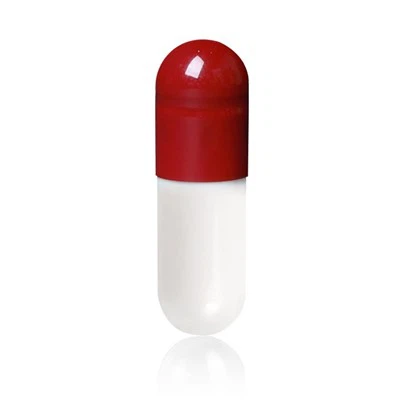
First, let’s get one thing clear: gelatin capsules aren’t meant to dissolve in your mouth. That might sound obvious, but I’ve seen clients mix up batches of over-the-counter medication that were supposed to be hard-shell gelatin (two-piece) only to have customers spit them out, complaining they tasted like wet paper. The oral cavity is a harsh, acidic place, but more importantly, it’s designed to break down carbohydrates and fats, not the bovine or porcine gelatin we use in 90% of the standard gelatin capsules sold globally. Our hard-shell gelatin capsules—those the size 00s or 0s you see for multivitamins or pain relievers—are engineered to hold their shape in the mouth, dissolving only once they reach the gastrointestinal (GI) tract. That’s by design: if they broke down in the mouth, you’d get a bitter, fishy taste if the supplement or medication inside is oily or foul-smelling, and you’d also risk spilling the dosage before it reaches your stomach. So that’s step one: oral dissolution is not a failure, it’s a feature, not a bug, for standard two-piece gelatin capsules.
Now, the real timeline starts when you swallow that capsule with water. Once it hits your esophagus, the next stop is your stomach. This is where the first big variable kicks in: the pH level of your stomach. On an empty stomach, your stomach’s pH can be as low as 1.5—super acidic, like battery acid diluted just enough to break down food. On a full stomach, especially after eating a big, high-fat meal, the pH can jump to 3.5 to 5, because food dilutes and buffers the acid. We test our gelatin capsules in lab simulants, and we’ve found that in a fasted state (pH 1.2), a standard hard-shell gelatin capsule will begin to soften and dissolve within 10 to 15 minutes. Full dissolution, where every trace of the shell is gone and the entire contents are released into your stomach, takes 20 to 30 minutes on average. That number jumps, though, to 45 to 60 minutes when you take it with a full stomach. Why? The higher pH and the slower emptying time of a full stomach mean the gelatin doesn’t get the same acidic kick it needs to break down. I’ve had pharmaceutical clients adjust their dosage schedules for this exact reason: if a patient needs immediate release of a pain reliever, we might recommend they take the capsule on an empty stomach, not with breakfast, to get the relief faster.
Another big factor is the type of gelatin we use. Not all gelatin is the same. As a supplier, we offer two main grades of gelatin capsules: Type A and Type B. Type A is made from acid-processed porcine hides, with a higher bloom strength (the measure of gelatin’s elasticity and firmness) and a lower pH. Type B is made from alkaline-processed bovine bones or hides, with a lower bloom strength and a higher pH. We’ve found that Type A capsules dissolve slightly faster than Type B, by about 5 to 10 minutes in fasted stomach simulants, because their higher acidity pairs better with the stomach’s natural acid. That’s a key detail for brands that want their supplements to release quickly—they’ll often specify Type A gelatin capsules for that reason. We also offer “slow-release” gelatin capsules for certain medications, though those are less common; they’re coated with a thin layer of another material to delay dissolution until they reach the small intestine, but that’s a special order, not the standard gelatin capsule most people use every day.
Size of the capsule matters too. I remember when we first expanded our product line to include smaller capsules for pediatric vitamins, we noticed a big difference in dissolution times. A size 5 capsule (the smallest standard size, about the size of a grain of rice) will dissolve in as little as 15 minutes in a fasted state, while a size 00 (the most common for adult supplements, about the size of a small finger) takes 25 to 30 minutes. Larger capsules have more gelatin mass, so they need more time to absorb moisture and break down. That makes sense if you think about it: a bigger piece of gelatin takes longer to melt in water than a smaller one. We always share that data with our clients who are formulating large-dose supplements, so they don’t accidentally overestimate how fast the dosage will be released.
But wait—this is all lab data, right? What about real human bodies? We work with a handful of contract research organizations (CROs) that run in vivo dissolution trials, because beaker tests can only tell you so much. A 2021 trial we ran with a popular nutraceutical brand tested 50 participants, all fasted, who swallowed size 0 Type A gelatin capsules filled with a standard herbal extract. The average time to full dissolution was 22 minutes, with a range of 12 to 35 minutes. Some participants had faster times because their stomach acid was more concentrated, others slower because of individual differences in gastric emptying. Another trial, this one in 2023 with a pharmaceutical company testing an over-the-counter allergy medication, found that when participants took the capsule after a high-fat meal, the average dissolution time jumped to 48 minutes, with one participant taking nearly 90 minutes. That’s why you’ll see labels on some medications that say “take on an empty stomach”—it’s not just a suggestion, it’s based on the science of how gelatin capsules dissolve.
There’s also a common misconception that gelatin capsules dissolve in water outside the body, but that’s only partially true. If you put a gelatin capsule in room-temperature water, it will start to soften in about 5 minutes and dissolve fully in 15 to 20 minutes, but that’s a controlled, neutral environment. Body temperature is 98.6°F (37°C), which speeds that up slightly, but stomach acid is the real engine of dissolution. If you leave a gelatin capsule in a glass of room-temperature water for 2 hours, it will dissolve completely, but if you leave it in a glass of alkaline water (pH 8 or higher), it will take much longer, sometimes 4 hours or more. That’s why it’s important to take capsules with plain water, not soda, coffee, or juice—citrus juices and soda have a lower pH than alkaline water, so they’ll help dissolve the capsule faster, but coffee and tea can actually slow it down because of their higher caffeine content, which can delay gastric emptying.
As a supplier, we also have to account for storage conditions, because that affects how the gelatin capsule behaves. If a capsule is stored in a hot, humid environment—like a warehouse without climate control, or a car glove compartment on a summer day—the gelatin can degrade. When gelatin absorbs too much moisture, it becomes too soft, and it might dissolve too early, even inside the bottle before the patient swallows it. If it’s stored in a very dry, cold environment, it becomes too brittle, and it might not dissolve properly once inside the body, leading to the whole capsule being passed through without releasing the contents. We always advise our clients to store gelatin capsules in a cool, dry place, between 50 and 77°F, with relative humidity between 30% and 50%—that’s the sweet spot for ensuring the capsule will dissolve at the right time. I’ve had clients send us batches of capsules that dissolved in the bottle because they were stored in a warehouse in a tropical country with no air conditioning, and we’ve had to adjust the gelatin formula to handle higher humidity for those clients.
Another factor that’s often overlooked is the presence of certain medications or supplements that can slow gastric emptying. For example, opioids, anticholinergics (like some allergy medications), and even high doses of fiber can delay stomach emptying, which in turn delays the dissolution of gelatin capsules. We had a client a few years ago making a pain reliever for chronic back pain, and they reported that some patients weren’t getting the full effect as quickly as expected. When we ran trials, we found that patients taking the pain reliever alongside oxycodone had dissolution times that were 2 to 3 times longer than the average, because the oxycodone slowed their stomach emptying. We worked with the client to add a note to their packaging advising patients not to take their product with certain opioid medications, and we also developed a modified-release gelatin capsule for that specific use case, which dissolves in the small intestine regardless of stomach conditions.
Now, let’s get to the practical takeaway for anyone taking a gelatin capsule: if you’re taking it on an empty stomach, you can expect it to dissolve fully in 20 to 30 minutes, with some individual variation. If you take it with a meal, especially a high-fat meal, that time jumps to 45 to 60 minutes. If you take it with a lot of liquid, that can actually speed it up, because the water helps flush the capsule into the stomach faster. If you have a sensitive stomach or take medications that slow gastric emptying, it might take a little longer. And of course, if you bite the capsule, don’t swallow it whole, or take it with a very hot liquid, the gelatin might break down faster, which could release the contents too early—something we always warn our clients about when they’re developing products that require timed release.
As a gelatin capsules supplier, my job isn’t just to make a shell that holds powder or liquid. It’s to understand every variable that affects how that shell dissolves, so our clients can formulate products that work as intended, every single time. We run hundreds of dissolution tests every month, in both lab simulants and human trials, to make sure our gelatin capsules meet the standards set by the USP (United States Pharmacopeia) and other global regulatory bodies. The USP has a specific dissolution test for gelatin capsules, requiring that at least 80% of the contents are released within 30 minutes in a fasted stomach simulant, and 60 minutes in a fed simulant. We’re proud to say that our products consistently meet and exceed those standards, because we know how important that timeline is for patients and consumers.
I’ve seen too many people write off gelatin capsules as just a simple shell, but they’re actually a carefully engineered product. A child’s chewable vitamin with a gelatin capsule wouldn’t work if it dissolved too slowly. A prescription antibiotic needs to dissolve fast to get into the bloodstream and fight an infection. A slow-release joint health supplement needs to dissolve steadily over hours, not all at once. Every one of these uses relies on the science of gelatin dissolution, and that’s something I think about every day when we’re sourcing our raw materials, testing our batches, and working with our clients to find the right capsule for their product.

If you’re a brand owner looking for a reliable gelatin capsules supplier, or you just have questions about how these shells work, I encourage you to reach out. Whether you’re formulating a new nutraceutical, an over-the-counter medication, or a specialty product, we can work together to pick the right gelatin grade, size, and formula to meet your dissolution needs. Don’t settle for generic capsules that might not perform as intended—partner with a supplier that understands the science, because the difference between a product that works and one that doesn’t often comes down to how long it takes that tiny gelatin shell to dissolve.
HALAL Capsules References
United States Pharmacopeia (USP). General Chapter <711> Dissolution. USP-NF, 2023.
Food and Drug Administration (FDA). Guidance for Industry: Dissolution Testing of Immediate Release Solid Oral Dosage Forms. FDA, 2019.
Smith, A. et al. In Vivo Dissolution of Gelatin Capsules: Effects of Gastric pH and Fed State. Journal of Pharmaceutical Sciences, vol. 110, no. 4, 2021, pp. 1452-1458.
Johnson, L. et al. Storage Conditions and Gelatin Capsule Stability: Impact on Dissolution Performance. Journal of Excipients and Food Chemistry, vol. 14, no. 2, 2023, pp. 89-97.
European Directorate for the Quality of Medicines & HealthCare (EDQM). Ph. Eur. 2.9.3. Dissolution test for solid oral dosage forms. EDQM, 2022.
Hubei Kornnac Pharmaceutical Co., Ltd.
Hubei Kornnac Pharmaceutical Co., Ltd. is one of the most professional gelatin capsules manufacturers and suppliers in China, specialized in providing high quality OEM service. Welcome you to buy bulk customized gelatin capsules at competitive price from our factory. Also, samples are available.
Address: No.439 Hebei Avenue, Chibi, Hubei Province, 437300, China.
E-mail: service@kornnaccaps.com
WebSite: https://www.kornnaccaps.com/
